
Environment and Climate
The greenhouse that learned to doubt its own sensors
Minal Rehan built a greenhouse automation system with Pakistan's smallholder farmers in mind, and after one drifting five dollar sensor nearly froze her seedlings, every version now checks its readings against two sources before acting.
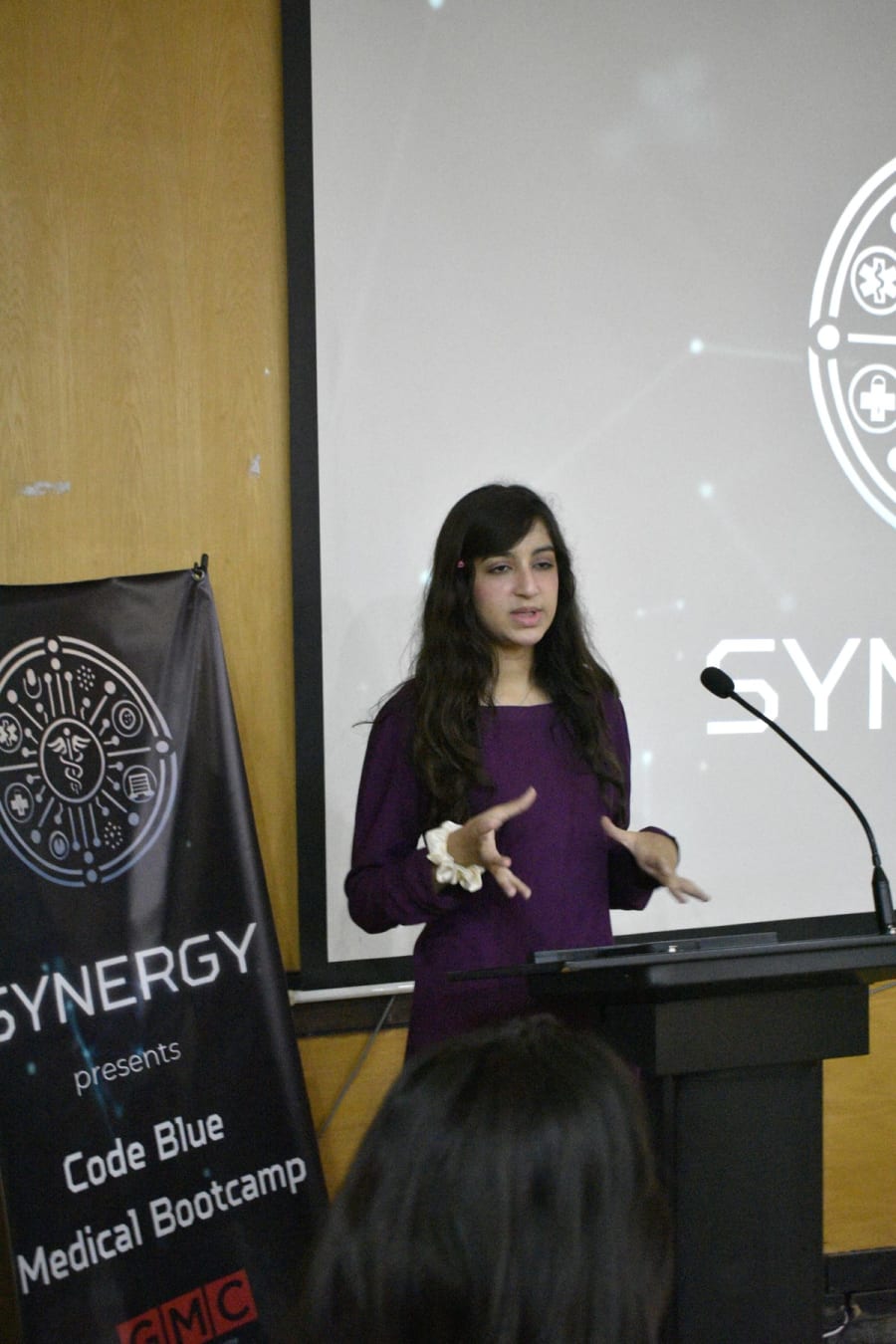
"At 1am on a Tuesday I was standing in front of a greenhouse prototype at NUST, staring at a screen that said 41 degrees when the room was clearly not 41 degrees," Minal Rehan says.
She had built the automation herself, humidity, temperature and light sensors wired into a system meant to keep conditions steady whatever Pakistan's weather did that day. It worked for six days. On the seventh, the temperature sensor started reporting numbers that made no sense, and the system, trusting its own bad data, cranked the cooling into overdrive. "I found the seedlings shivering under cold air at midnight because a five dollar sensor had drifted and nothing in my design knew how to doubt it," she says.
“Always find an excuse to do the next impossible task. The idea was put in your mind because it is only you who can make it a reality.”
Minal Rehan
She had no backup sensor. She had a soldering iron, a scavenged thermistor and four hours before the seedlings took real damage. She rebuilt the circuit on the lab floor, calibrating it against her own hand, "warm palm, cold water, warm palm again, until the numbers matched what I could feel." By 5am it read true. The seedlings made it.
Now every version checks readings against two sources before acting. The system exists, she says, because Pakistan's smallholder farmers face this exact problem, "but without a lab, a spare thermistor, or four hours to spare."
She built it without money, she says, the same way she has built everything since she was fifteen. A bootcamp she started put 35 students inside university robotics labs and 50 more inside medical training with doctors, none of it funded upfront. She was also chosen as one of five Global Dignity Ambassadors nationally.
She is from Islamabad, and came to Canada for university. That refusal to wait for permission, she says, got her a scholarship to study Biomedical Engineering at the University of British Columbia in Vancouver. This fall she will be leading Imagine Day, UBC's welcome for incoming students.
The greenhouse, she says, "sits in the gap between prototype and something real." It has not yet proved itself across more than one crop or more than one season, and she wants to build a company around it.
"Build something that questions itself before it costs someone everything," she says. "That's what I'm working on."