
Health & Wellness
A portable filter that needs no electricity
Maryam Liaquat runs Ecorise, which gives women and communities practical tools, resources and knowledge for water and sanitation. One of them is a portable filter using ultrafiltration to remove up to 99.99% of bacteria, protozoa and microplastics, without electricity.
The filter is a straw. It uses ultrafiltration technology, needs no electricity, and is designed to remove 99.99% of bacteria, protozoa and microplastics from water. Maryam Liaquat developed it through Ecorise, the initiative she started, and she says it is the first solution of its kind she has introduced in her community.
"Growing up, I saw how something as basic as clean water could shape almost every part of a person’s life," she says. Unsafe water in her community affected people's health, kept children away from school, and placed what she calls an unfair burden on women and girls who often had to manage water for their families.
“Growing up seeing the consequences of unsafe water made me realise that clean water is not just an environmental issue, but a question of dignity, health, and human rights. Through Ecorise, I’m trying to turn that realisation into practical solutions that put women and communities at the centre of change.”
Maryam Liaquat
That stayed with her. It eventually pushed her to start Ecorise, she says. "I wanted to do something practical rather than simply talk about the problem." She began working on affordable water filtration and WASH education, focusing on communities that are often overlooked.
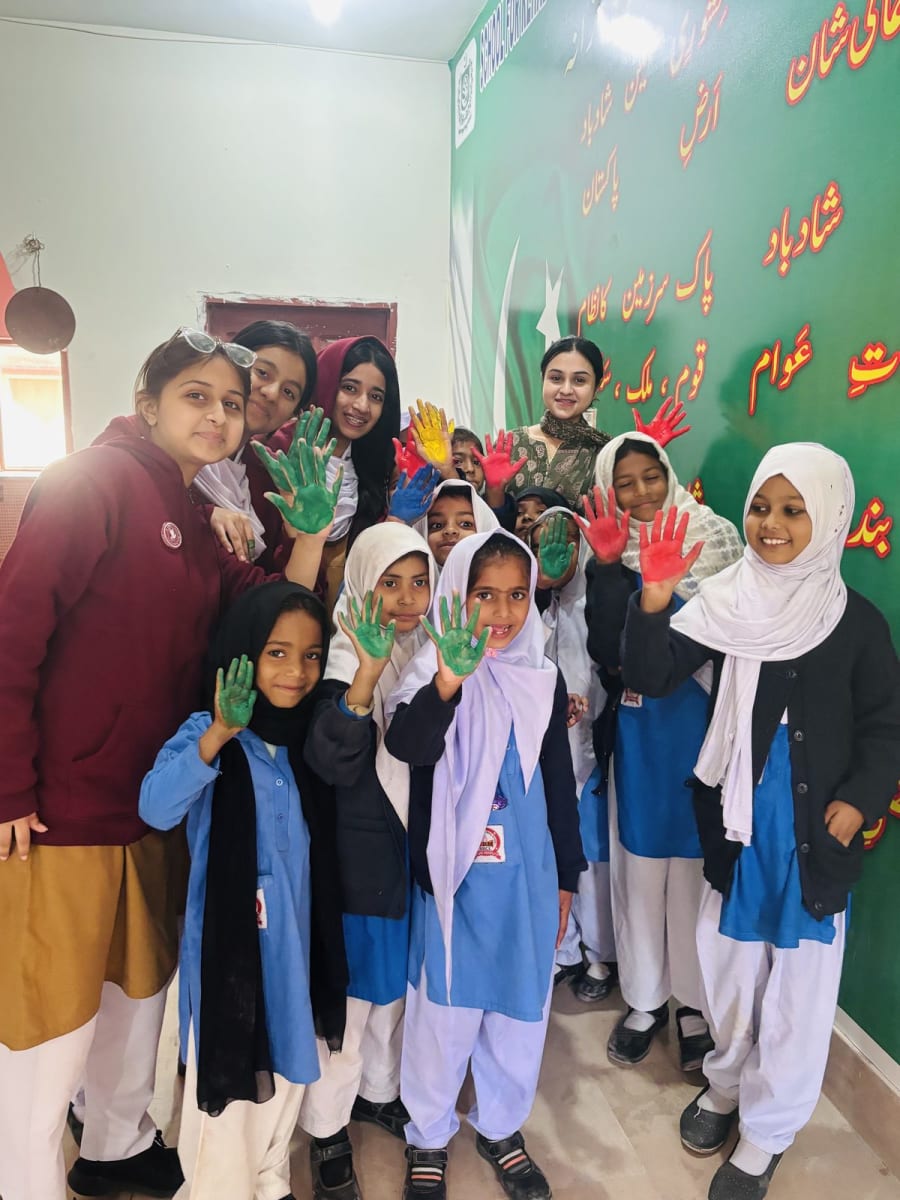
Ecorise is youth-led, and the filter is one tool inside a wider brief: water access, WASH education and community empowerment. She runs WASH awareness sessions that help children and families understand hygiene, sanitation and water conservation, and supports sanitation initiatives that build safer everyday practices.
The numbers so far: thousands of women and girls reached through WASH awareness, more than 100 sanitation kits distributed containing 400 hygiene items, and what she describes as a significant reduction in waterborne illness in the communities where Ecorise has worked.
Seeing people interact with a simple technology that can make safer water more accessible has, she says, made the work especially meaningful to her.
"The project is still growing, and I am still learning," she says. "Every community I work with teaches me something about what people actually need and what makes a solution practical in everyday life."