
Health & Wellness
Catching diabetes years before the glucose test
Myra Saxena taught herself Python to build BetaSense, a machine learning model she says can catch pre-diabetes in its reversible stage, and her youth non-profit Sparklez has raised $15,000 for community health equity.
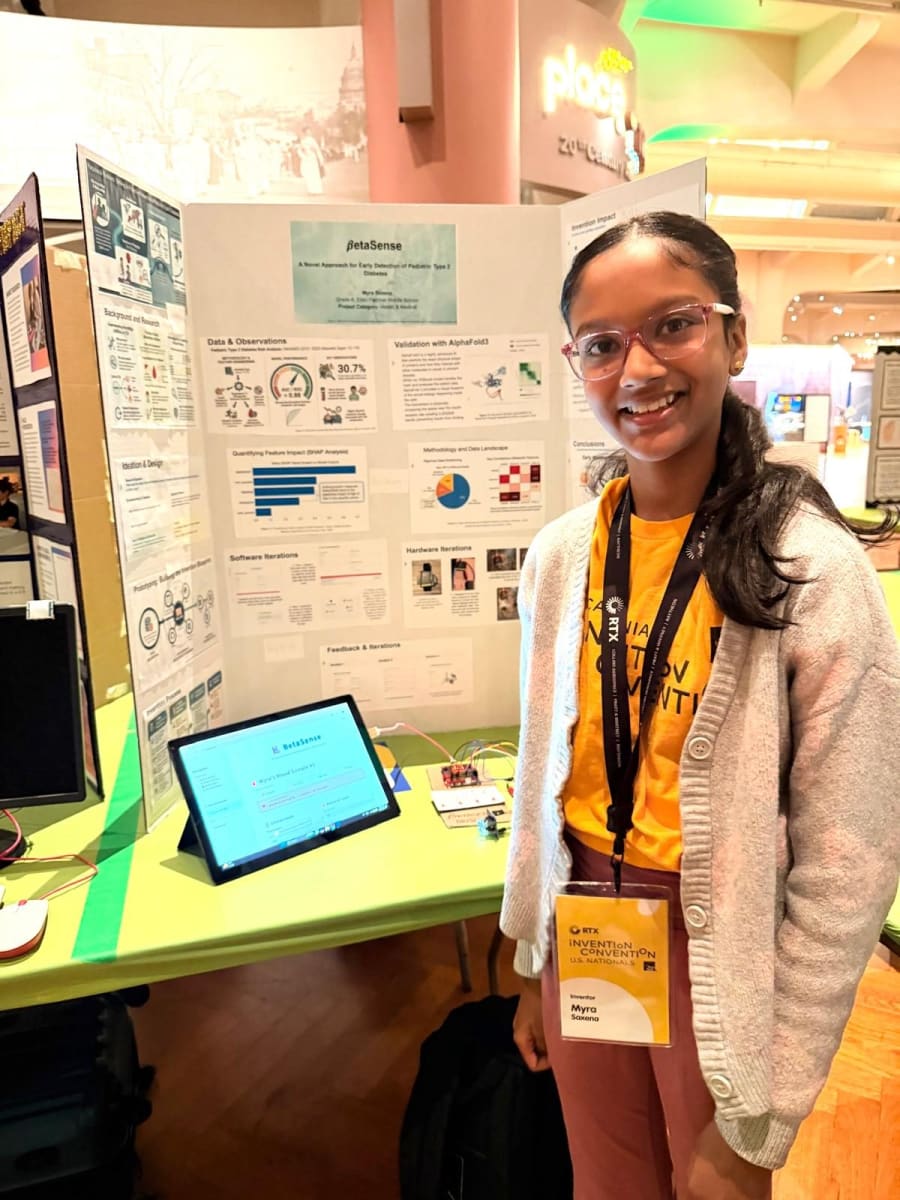
"Glucose is a lagging indicator," Myra Saxena says. We wait for a child's blood glucose to spike before diagnosing them, and by then, she says, permanent cellular damage is already happening.
She lost her grandfather to Type 2 Diabetes and kidney failure when she was seven. "Watching him suffer made me realize that we are fighting this disease entirely wrong," she says.
“Never give up, even if people tell you that you can't do it or that you're too young. It is never too late to make a difference, and you can make it even earlier than people think. If you have an idea, you should just go for it.”
Myra Saxena
So she spent the last year independently teaching herself Python and data visualization to build BetaSense, a computational approach that tracks hidden, early warning signs. The model combines systemic immune signals (NLR and CRP) with lifestyle data and microRNAs, and she says it proves pre-diabetes can be caught in its hidden, completely reversible stage, years before it shows up on a standard glucose test. Her models achieved an AUC of 0.88.
Alongside the research she runs Sparklez, a youth non-profit she has used to raise $15,000 for community health equity and to raise awareness for kids' diabetes camps at John Hopkins.
Her research is computational for now. She is a middle schooler at Ellen Fletcher Middle School, and she says university wet labs legally cannot take her because of age liability rules.
This summer she is moving from diagnosis to therapeutics, independently coding a virtual molecular docking pipeline to screen libraries of thousands of chemical compounds against the specific proteins that are over expressed in youth type 2 diabetes.