
Economic Empowerment
Felicitated at Rashtrapati Bhavan, and what came after
Akshat Bhaskar was one of 17 students recognised across India under the Government of India's SOAR initiative for his work in AI, and runs a podcast, an olympiad maths programme and a financial literacy chapter alongside it.
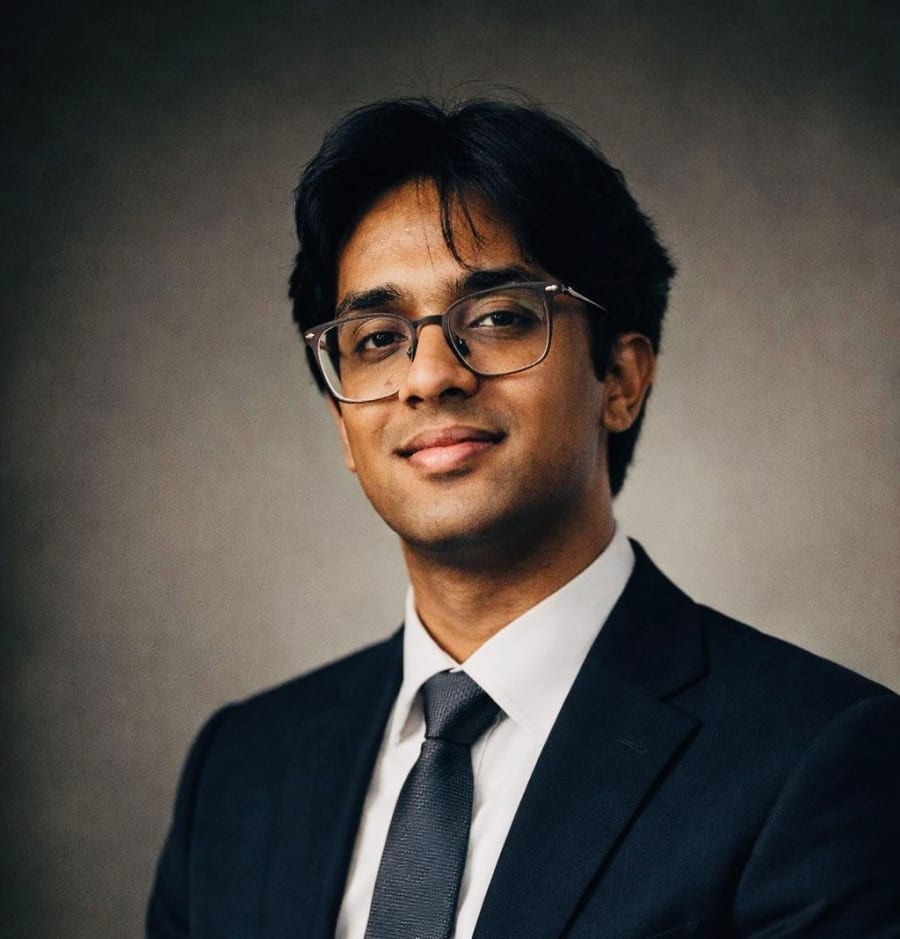
In January 2026 Akshat Bhaskar was felicitated at Rashtrapati Bhavan by the President of India, Droupadi Murmu, as one of 17 students from across the country recognised under the Government of India's SOAR initiative for work in AI.
What he does sits across several things at once: mathematics, economics, education, research, AI and youth-led media.
“I began viewing finance not as numbers on a spreadsheet, but as human drama, full of panic, hope, bad decisions, and the occasional pyramid scheme.”
Akshat Bhaskar
Decoded is the podcast he co-founded. It works through economics, technology, AI, finance, entrepreneurship and public policy in conversation with researchers, academics and people doing the work.
Project Fermat is newer, a mathematics education initiative he started with Ishaan Harish. It brings together talented high school students, university undergraduates and researchers to teach olympiad mathematics to students in Classes 6 to 8.
The financial literacy work is the longer thread. He co-founded Edunomix India, the Indian chapter of a US-based nonprofit, and acted as CFO at TaxCity Education India, which has reached 79,000 young adults and students with a physical card and board game teaching India's taxation system, and drawn support from the Ministry of Education, several Members of Parliament and schooling chains across the country.
What he kept noticing was not a content problem. "The material exists. The urgency exists. What doesn't exist is something a 10-year-old would actually open twice," he says. "The content is rarely the bottleneck. The bottleneck is almost always whether anyone is paying attention."
FinKid is the project he is developing out of that: a Duolingo-style financial literacy app for children, structured around short daily lessons and streaks, teaching compounding, budgeting and credit "the way a game would teach them, not the way a textbook would." He pitched it at Eureka! Juniors at IIT Bombay and was selected at national level. "I haven't built it completely yet," he says. "I'm being honest about that."
He got into financial literacy at 16, "sideways, and without fully understanding what I was walking into." An internship at the Ministry of Education gave him a different vantage point: institutional financial education in India is well-intentioned, and also slow, reaching students at the wrong moment and in the wrong format. "Usefulness has never been enough to sustain attention in a teenager."
"The gap is engagement," he says.