
Leaders of TodayLeaders of Today
BrowseWorkspaceProfile
Leaders of Today

Every opportunity worth finding, checked against its source.

Submit an Opportunity
Leaders of TodayAbout UsBlogContactReport a Bug
LegalCookiesDisclaimerPrivacy PolicyTerms of Service

© 2026 Leaders of Today™. All Rights Reserved.

This opportunity has closed. It stays published for reference, and new cycles reopen here when the organizer announces them. Browse open opportunities

OHCHR Indigenous Fellowship Programme

  • Organization: Office of the UN High Commissioner for Human Rights (OHCHR)
  • Type: Fellowship
  • Location: Global
  • Deadline: September 13, 2026
  • Funding: Fully Funded

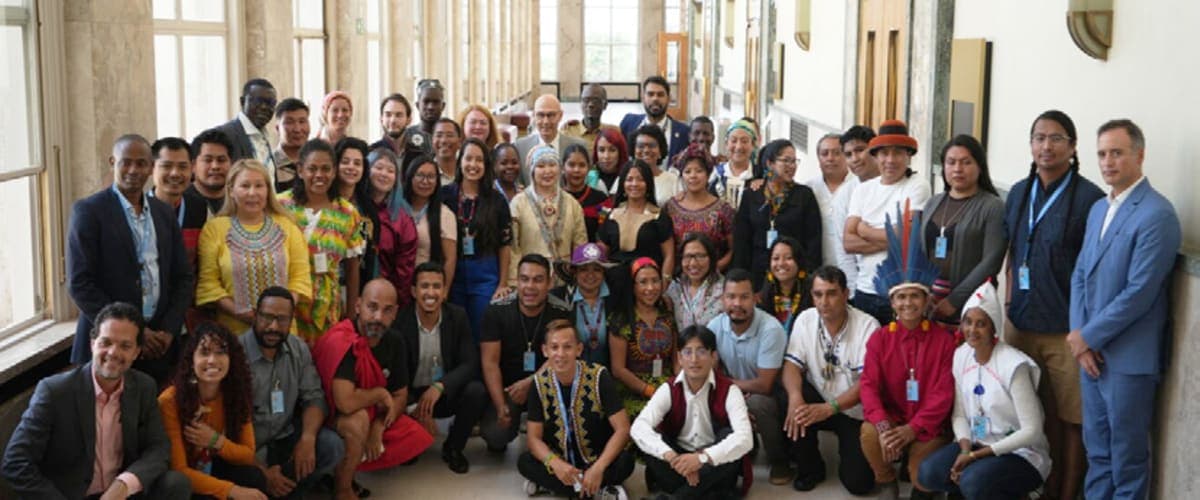
The Office of the UN High Commissioner for Human Rights (OHCHR) has run this training for Indigenous representatives since 1997. Fellows spend four weeks in Geneva learning how the UN human rights system works and how to use its mechanisms to protect their communities' rights, then go home and train others. It runs in English, Spanish, French and Portuguese, and all four language groups train together with simultaneous interpretation. **What you get:** - A return flight ticket to Geneva, in economy class - A daily stipend covering your living expenses for the four weeks - Basic health insurance for the duration of the training - Help with housing: OHCHR and the Geneva Welcome Centre arrange accommodation in Geneva at a subsidised rate - An OHCHR certificate if you complete the full programme - A network of Indigenous activists, organisations and human rights experts from around the world **What you'll do:** - Train for four weeks in Geneva with fellows from all four language groups, with simultaneous interpretation - Learn international human rights standards and how UN mechanisms work, with a focus on Indigenous Peoples' rights - Observe sessions of UN human rights bodies such as the Human Rights Council, the Universal Periodic Review and the treaty bodies - Take part in the annual session of the Expert Mechanism on the Rights of Indigenous Peoples, which the training usually coincides with - Meet the Special Rapporteur on the rights of Indigenous Peoples and members of the Permanent Forum on Indigenous Issues - Train other Indigenous people in your community or organisation when you return home **Key dates:** - Applications close 13 September 2026 at 23:59 Geneva time - Only pre-selected candidates are contacted, and they are then interviewed - The four-week training in Geneva usually takes place in June or July, alongside the annual session of the Expert Mechanism on the Rights of Indigenous Peoples; 2027 dates are not yet published **More information:** - Apply through OHCHR's online form, available in English, Spanish, French and Portuguese; parts I and II must both be completed or the application is not considered - Upload the recommendation letter from your Indigenous organisation or community directly to the online form - Passport and visa costs are yours, as there is no visa allowance, though OHCHR says visas for its fellowships are usually free of charge - OHCHR notes that some past participants have faced intimidation or reprisals for engaging with the UN, and asks candidates to weigh this before accepting - Questions go to ohchr-fellowship@un.org
Apply for OHCHR Indigenous Fellowship Programme

Office of the UN High Commissioner for Human Rights (OHCHR)Fellowship

OHCHR Indigenous Fellowship Programme

This one has closed
Archived
Opportunity type
Fellowship
Funding
Fully Funded
Location
Global
Deadline
Archived

About this opportunity

The Office of the UN High Commissioner for Human Rights (OHCHR) has run this training for Indigenous representatives since 1997. Fellows spend four weeks in Geneva learning how the UN human rights system works and how to use its mechanisms to protect their communities' rights, then go home and train others. It runs in English, Spanish, French and Portuguese, and all four language groups train together with simultaneous interpretation.

What you get:

  • A return flight ticket to Geneva, in economy class
  • A daily stipend covering your living expenses for the four weeks
  • Basic health insurance for the duration of the training
  • Help with housing: OHCHR and the Geneva Welcome Centre arrange accommodation in Geneva at a subsidised rate
  • An OHCHR certificate if you complete the full programme
  • A network of Indigenous activists, organisations and human rights experts from around the world

What you'll do:

  • Train for four weeks in Geneva with fellows from all four language groups, with simultaneous interpretation
  • Learn international human rights standards and how UN mechanisms work, with a focus on Indigenous Peoples' rights
  • Observe sessions of UN human rights bodies such as the Human Rights Council, the Universal Periodic Review and the treaty bodies
  • Take part in the annual session of the Expert Mechanism on the Rights of Indigenous Peoples, which the training usually coincides with
  • Meet the Special Rapporteur on the rights of Indigenous Peoples and members of the Permanent Forum on Indigenous Issues
  • Train other Indigenous people in your community or organisation when you return home

Key dates:

  • Applications close 13 September 2026 at 23:59 Geneva time
  • Only pre-selected candidates are contacted, and they are then interviewed
  • The four-week training in Geneva usually takes place in June or July, alongside the annual session of the Expert Mechanism on the Rights of Indigenous Peoples; 2027 dates are not yet published

More information:

  • Apply through OHCHR's online form, available in English, Spanish, French and Portuguese; parts I and II must both be completed or the application is not considered
  • Upload the recommendation letter from your Indigenous organisation or community directly to the online form
  • Passport and visa costs are yours, as there is no visa allowance, though OHCHR says visas for its fellowships are usually free of charge
  • OHCHR notes that some past participants have faced intimidation or reprisals for engaging with the UN, and asks candidates to weigh this before accepting
  • Questions go to ohchr-fellowship@un.org

Who can apply

  • You must be Indigenous; non-Indigenous people are not considered, even if they have close links with Indigenous communities or organisations
  • Your Indigenous organisation or community must propose you and support your candidacy, with an official recommendation letter
  • Good working knowledge of the language of the group you apply to: English, Spanish, French or Portuguese
  • You must agree to train other Indigenous people after you return to your community or organisation
  • Formal education is not a requirement
  • No upper age limit; OHCHR's FAQ says only candidates over 18 are considered
  • Former fellows are not considered
  • Parents, children, siblings and spouses of UN staff members are not eligible
  • Indigenous women, LGBTQI+ people and persons with disabilities are strongly encouraged to apply

AI Verification

✓ AI Verified

Our AI read the official sources and cross-checked the key facts. Here is what held up, and what it could not confirm.

We could not fully verify this organization or all of its details. Check it independently on the official website before you apply, and never share sensitive personal or financial information until you are sure a request is genuine.

80
LOT Verification ScoreSolid

Cross-checked 14 of 20 key facts

Confirmed Our best read Not stated

Good to know

  • +Four weeks of training in Geneva on how the UN human rights system works and how to use it for your community
  • +Covers your return flight, daily living costs and basic health insurance
  • +No formal education requirement, and training runs in English, Spanish, French or Portuguese
  • +Run by the UN Human Rights Office since 1997, and free to apply

Worth checking yourself

  • !Closes Sunday 13 September at 23:59 Geneva time
  • !Only for Indigenous people, and you need an official recommendation letter from your Indigenous organisation or community, uploaded with the form
  • !You pay for your passport and any visa, though OHCHR says visas are usually free, and housing is subsidised rather than free
  • !The 2027 training dates are not published yet; it usually runs in June or July
  • !OHCHR's own guidance warns that some participants have faced reprisals for engaging with the UN

Sources checked

WEweb.archive.orgOfficialOHohchr.orgApplySUsurvey.ohchr.orgOfficialOHohchr.orgApplyWEweb.archive.orgOfficialOHohchr.orgApplyOHohchr.orgApply

LOT finds and checks opportunities from public sources. Always confirm details on the organiser’s own page before applying.

OHCHR Indigenous Fellowship Programme
Archived
This one has closed