
Environment and Climate
Five school thrift fairs and a playbook for the next
Vivaan Sahu runs Thryft, a student-led circular fashion project that has organised five school thrift fairs and now sources stock through partnerships with local thrift stores.
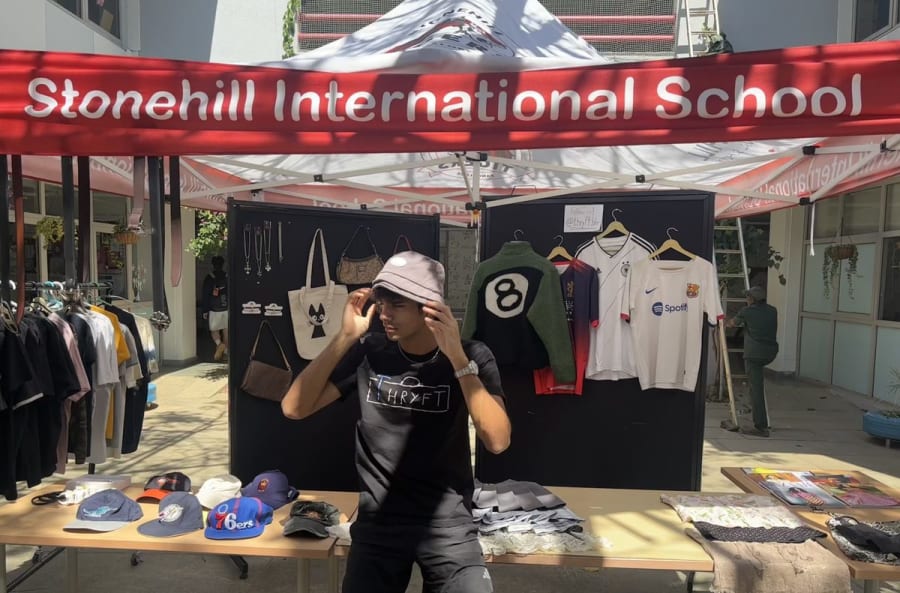
Growing up, there was always a tailor working from Vivaan Sahu's living room. His dad is a fashion designer. "I watched sketches become garments, but I also watched piles of trial pieces, leftover fabric, and perfectly wearable clothing slowly lose their purpose," he says. Some were donated. Many were thrown away.
That became Thryft, a student-led circular fashion initiative that brings thrift culture into school communities. Since starting, they have run five school thrift fairs, built partnerships with local thrift stores and given students the chance to style, model, market and run an actual venture. Vivaan, a student at Stonehill International School, first began the project during Thapar Academy's entrepreneurship programme, where his team won ₹50,000 with support from Namita Thapar. He kept building it afterwards with a friend, and a few months ago Thryft received a $2,200 grant from the IB Global Youth Action Fund.
“The state of Equanimity is my philosophy”
Vivaan Sahu
Selling thrifted clothing turned out not to be the hard part. "The real challenge was changing perception," he says. Most people his age had never considered buying second-hand, "not because the clothes weren't good enough, but because of what they thought other people would think." So instead of statistics about textile waste, the team worked on making thrift feel aspirational, with curated collections instead of clothes piled on tables. Watching students who once would not look at second-hand clothing "spend twenty minutes styling outfits, bring their friends back the next day, and proudly wear something they never expected to buy" is, he says, when he knows they are changing more than wardrobes.
Sourcing was the other lesson. Early on almost everything depended on donations, so he started approaching local thrift stores. "Cold messages became meetings. Meetings became partnerships," he says. After one recent fair, a partner told him a bag had come back damaged. "We apologised, accepted responsibility, and changed the way we check, pack, and return inventory," he says.
Now he is working on making Thryft replicable, a framework another student can pick up in a different city and keep improving without him. "I don't want Thryft to become the biggest thrift store," he says. "I want it to become proof that students can change how people think about fashion."