
Education Access
One summit, 51 youth leaders and a plan to take opportunity beyond the capital
Roy Gari Flores Gutierrez founded Future For Scholars, whose first summit brought 51 students together with 26 mentors and 10 organisations, to bring global academic pathways within reach of high-performing students in the Andes.
Fifty-one high school students, 26 specialised mentors, 5 speakers and 10 organisations, across two days at UTEC. That was the Future Scholars Summit, the first initiative of Future For Scholars, or FFS. The mentors guided thematic tables in the sciences and the humanities, with subgroups on engineering, health, social sciences and business. The speakers talked about admissions, scholarships and leadership. The 10 organisations ran an opportunity fair, connecting students with academic and extracurricular openings they could actually take up. Students learned how to write authentic essays, build extracurricular projects, prepare scholarship applications and speak directly with people who had already walked the paths they hoped to follow.
"But what mattered most happened after everyone went home," Roy Gari Flores Gutierrez says. "Students kept writing to us," he says. They asked for feedback on essays, shared scholarship applications, introduced FFS to their schools and wanted to become mentors themselves.
“A system is not fair because one person can escape it.”
Roy Gari Flores Gutierrez
The Summit is planned as an annual event, the first edition being the starting point rather than a one-off. Alongside it, FFS runs an opportunity-sharing channel, where it keeps connecting students with scholarships, academic programmes, competitions and mentorships through the year. A broader student network is the ambition: he hopes participants from the first Summit will become volunteers, mentors and regional ambassadors, so the project can expand gradually beyond Lima. That part is still being built.
Roy grew up in Andamarca, a small town in Ayacucho, Peru, where students rarely talked about scholarships, research or universities abroad. "I thought the limits of my town were also the limits of my future," he says. A scholarship took him to COAR Lima, a public boarding school for high-achieving students, where classmates were applying to programmes he had never heard of. "Nothing about my ability had changed. The information around me had."
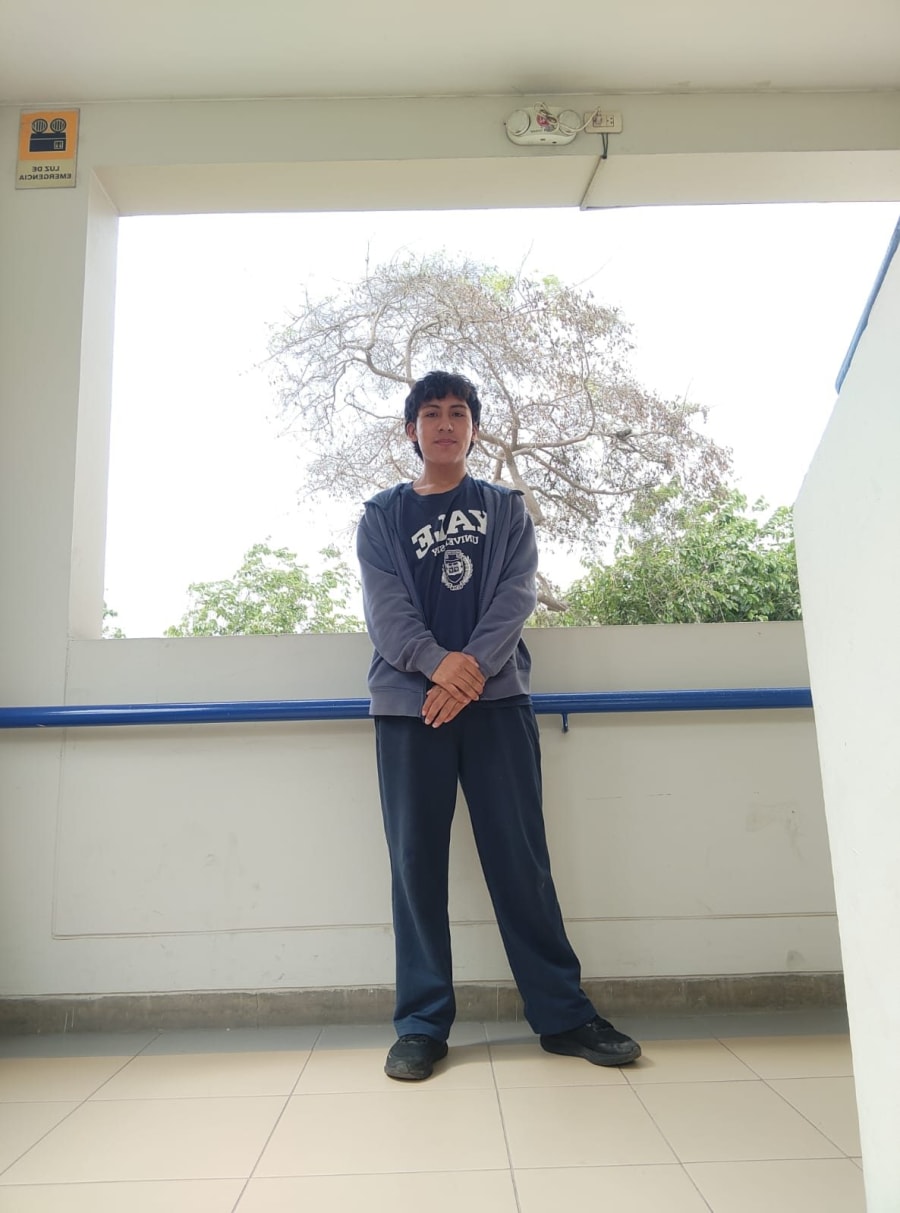
He has since taken part in the Yale Young Global Scholars programme, and says that left him unable to remain a lucky exception. "I had to build a bridge back home."
Rather than ask why rural students were not applying to international opportunities, he asked a different question. "What if they never knew those opportunities existed in the first place?" That question became FFS, which he describes as "an attempt to shorten the distance between talent and opportunity."
The step he is working towards is Ayacucho. He describes it as “returning to where this story started,” a first regional expansion, and one that is still ahead of them.
He says he once believed that opportunities like Yale or Stanford were never meant for someone like him. "If FFS succeeds, I hope fewer students from towns like Andamarca will ever have to."