
Environment and Climate
From a flooded home in Gilgit-Baltistan to climate policy
Pervez Aly missed seven months of school after flash floods in 2010, and today leads the International Climate Policy Division at ClimateWatch, a youth-led think tank in Pakistan.
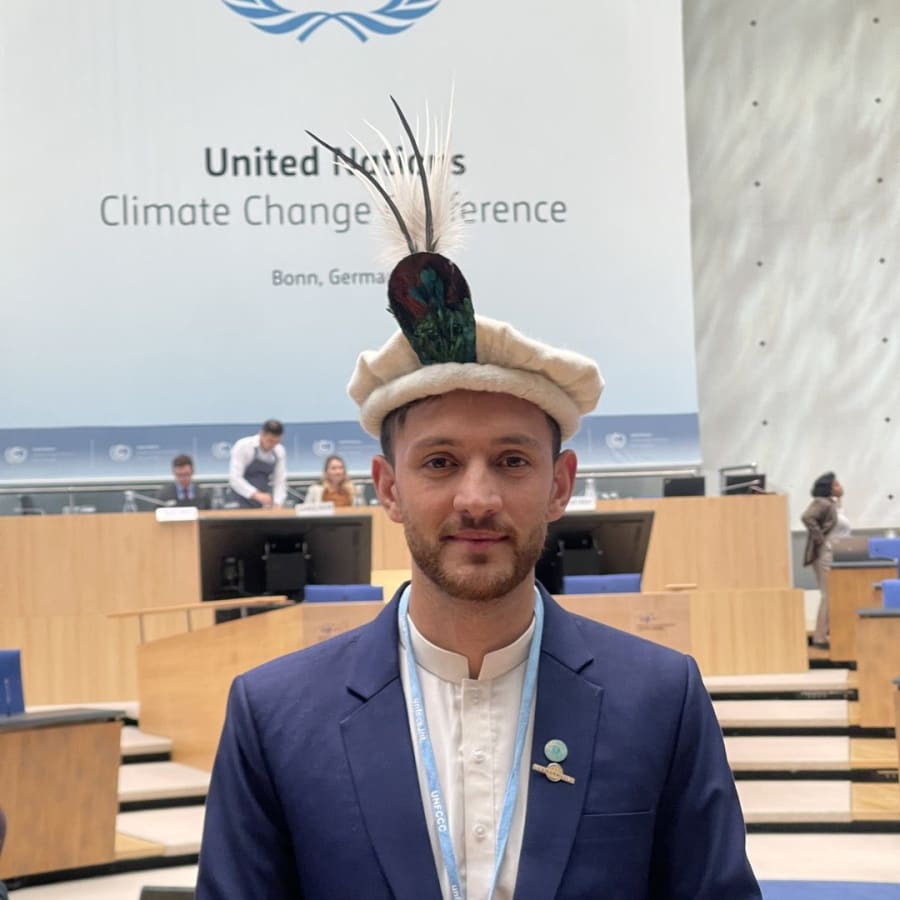
In 2010, flash floods destroyed a family home in Gilgit-Baltistan, Pakistan. The family fled in the middle of the night. A seven year old in that family missed seven months of school.
That child was Pervez Aly.
“Part of our year goes to negotiation halls arguing over bracketed texts, and part of it to the valleys where the same text decides whether lives are saved.”
Pervez Aly
"That experience made climate change deeply personal," he says. "I wasn't reading about it, I was living it."
Years later Pervez joined Fridays for Future Pakistan, eventually serving as a Chapter Lead and later as Country Coordinator. It was while organizing youth and climate campaigns, he says, that "I realized that communities most affected by climate change rarely influence the policies meant to protect them."
"That realization shaped my career."
Policy work followed. Pervez worked with COCAP Nepal "on food systems and community resilience," and later with Germanwatch as a Policy Advisor, "contributing to international climate policy, disaster risk reduction, and UNFCCC processes." Those experiences, he says, "taught me how global climate decisions are made, and how often frontline voices are missing."
Today Pervez, a graduate of Karakuram International University, leads the International Climate Policy Division at ClimateWatch. "We're building a bridge between grassroots realities and evidence-based climate policy," he says.
The work includes publishing policy research and designing community-centered early warning systems for mountain regions. It also includes developing Glacier School, which he describes as "a climate literacy initiative combining UNESCO's ESD 2030, the UNFCCC's Action for Climate Empowerment (ACE), and Traditional Ecological Knowledge."
The larger aim is a research ecosystem where young people "learn to conduct consultations, review literature, interview experts, and produce credible policy recommendations instead of stopping at awareness campaigns."
"We're still early," Pervez says. The team is volunteer-driven. Its first publications and partnerships, he says, are gaining recognition.
Of the negotiation halls and the valleys, Pervez says this: "I've stopped pretending those are two different jobs now."