
Tech
Seven students and a low-cost buoy for mariculture
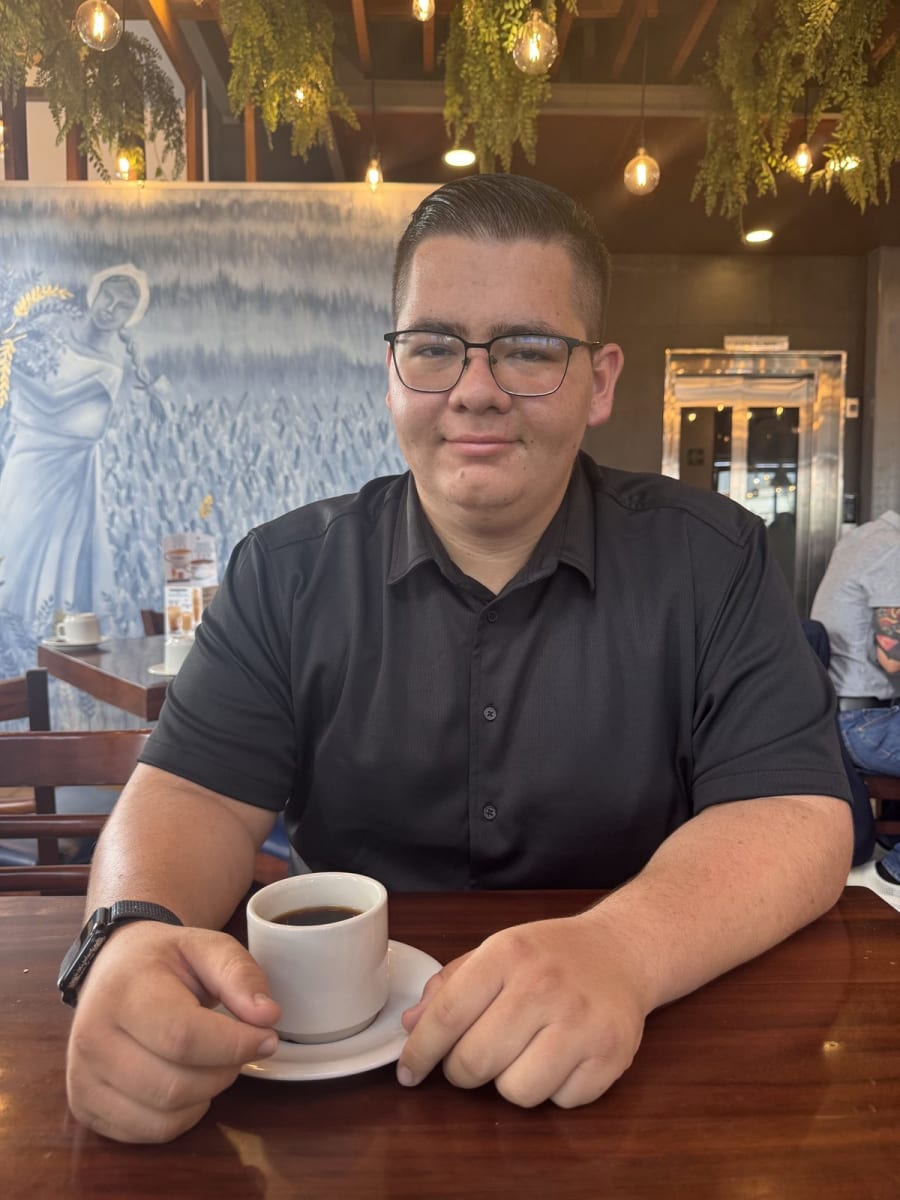
Luis Paul Lenz Fontan Sancho is one of seven students behind BlueLink, a low-cost marine monitoring system for mariculture, and leads its systems engineering team. The project was presented at the Third Central American Space Congress in Guatemala in September.
Salinity, pH, dissolved oxygen and temperature. Those are the four primary water-quality variables the BlueLink buoy is being designed to monitor, and the buoy is only the first of three parts. A ground station directs the data from the buoys, and a web platform gives users the collected information integrated with meteorological and satellite data to generate predictions, recommendations and insights.
BlueLink is a team of seven students interested in programming, electronics and engineering, working towards making marine monitoring technologies more accessible for mariculture. Luis Paul Lenz Fontan Sancho joined in his first semester at the Costa Rica Institute of Technology, and leads the project's systems engineering team. A close friend, Abigail, was studying there too. They had worked together before in hackathons and competitions, and when she learned he would be joining the university she invited him to work on a new project. BlueLink came out of the brainstorming that followed.
“Working on BlueLink has taught me that systems engineering and project management can be just as important as the technical engineering itself when working on a project.”
Luis Paul Lenz Fontan Sancho
The team has moved out of the initial design phase and into sensor acquisition and prototype development. They are seeking more in-depth market and stakeholder research in collaboration with the Costa Rican Institute of Fisheries and Aquaculture, INCOPESCA, while continuing to build the digital side: improving the project's website, developing an AI-powered chatbot to assist users, and working towards a predictive model that can turn collected environmental data into something a mariculture producer can make a decision on.
Then came the news. BlueLink was selected for presentation at the Third Central American Space Congress in Guatemala. The team travelled there in mid-September and presented, setting out BlueLink's development and its approach to combining marine monitoring, systems engineering and data-driven tools.
It was a milestone, and he is plain that it is not the finish. Significant development remains: functional prototypes, further validation of the system, and a technology that can make marine monitoring genuinely accessible and useful for producers.