
Tech
Late nights with a laptop and a research paper
Viktorija Arsova, a Computer Technologies and Engineering student at Ss. Cyril and Methodius University in Skopje, helped launch a renewable energy education platform and now spends much of her free time exploring how artificial intelligence and computational methods can support cancer and medical research.
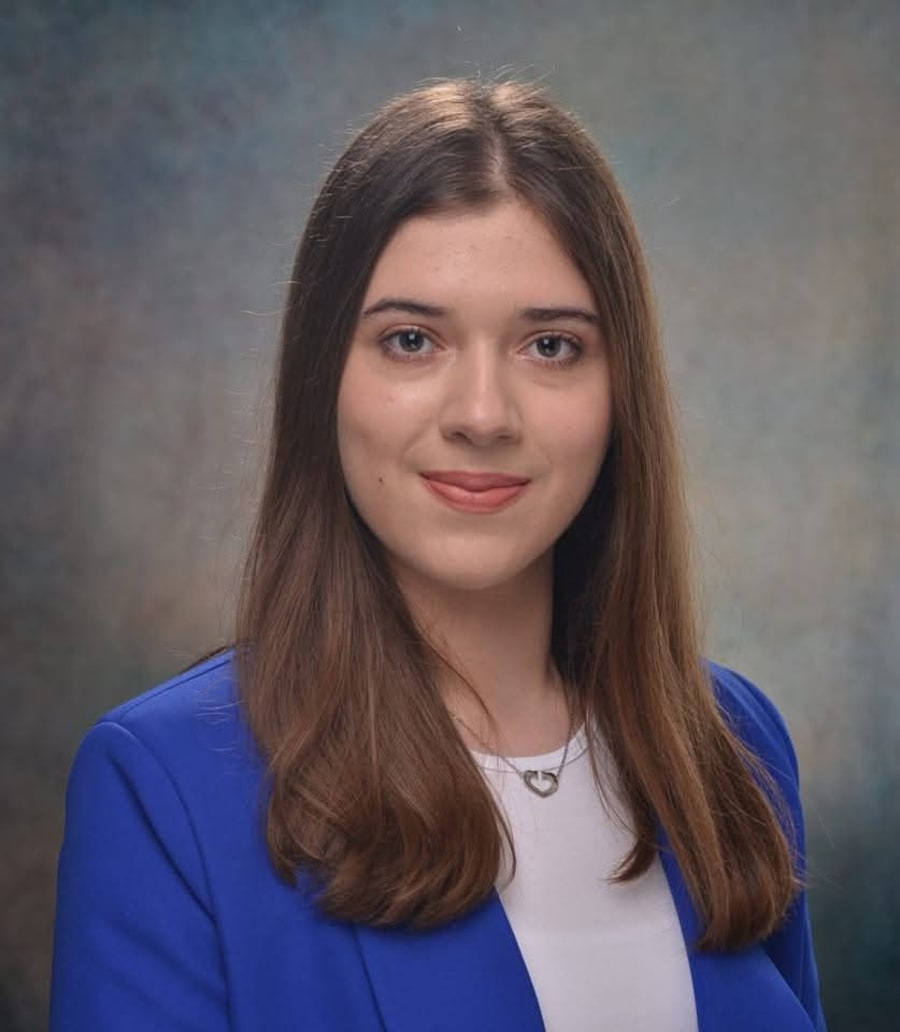
Most of Viktorija Arsova's work happens after classes, late at night or on weekends. "It's rarely glamorous," she says. "Usually, it's just me, my laptop, a research paper, and a new idea I want to explore."
She studies Computer Technologies and Engineering at the Faculty of Electrical Engineering and Information Technologies at Ss. Cyril and Methodius University in Skopje, and she says most of the things she works on start with curiosity. Over the years she has built projects in artificial intelligence and renewable energy, in healthcare and education, and in robotics. She has taken part in innovation competitions and worked on sustainability projects.
“What motivates me is the belief that technology should be useful.”
Viktorija Arsova
One of those projects is EKO, a renewable energy education initiative she helped develop. It was created, she says, "to address a gap we noticed in accessible educational resources about renewable energy for young people in North Macedonia." The platform is in Macedonian, built for a local audience, with educational content and interactive resources for students and educators. "Working on EKO taught me that innovation is not only about creating new technology," she says. "Sometimes it is about making knowledge more accessible and helping people understand ideas that can improve their future."
Right now her interest is where AI meets healthcare. Much of her free time goes into exploring how machine learning and data-driven methods could support medical research, and cancer research in particular. She is interested in how AI can help researchers work with complex biological and medical data, find patterns that are hard to detect by conventional means, and build new computational tools for studying disease, with a view to earlier detection and classification. The projects are still in development, and she sees them as a way to put her engineering background alongside a growing interest in the life sciences.
Her newest work is "Envisioning Uusimaa," which she describes as "a forward-looking digital concept" exploring how technology, sustainability, smart mobility, healthcare innovation, culture and inclusive design can come together "to create a happier, smarter, and more sustainable future." The project will be presented as part of the international Envisioning Uusimaa virtual exhibition in Finland later in 2026, alongside works from participants from different countries.
She also describes a growing interest in quantum technologies and their potential to transform computing and cybersecurity, as emerging technologies open new opportunities and new problems across different fields.
"I don't have everything figured out yet, and honestly, that's part of what makes the process exciting," she says.