
Tech
A free browser extension that catches scams before you click anything
Deeksha Karthik built Kedayam, a browser extension that detects phishing, ClickFix malware, data leaks and tech-support scams entirely on the user's device, and has put it through fourteen rounds of adversarial security auditing.
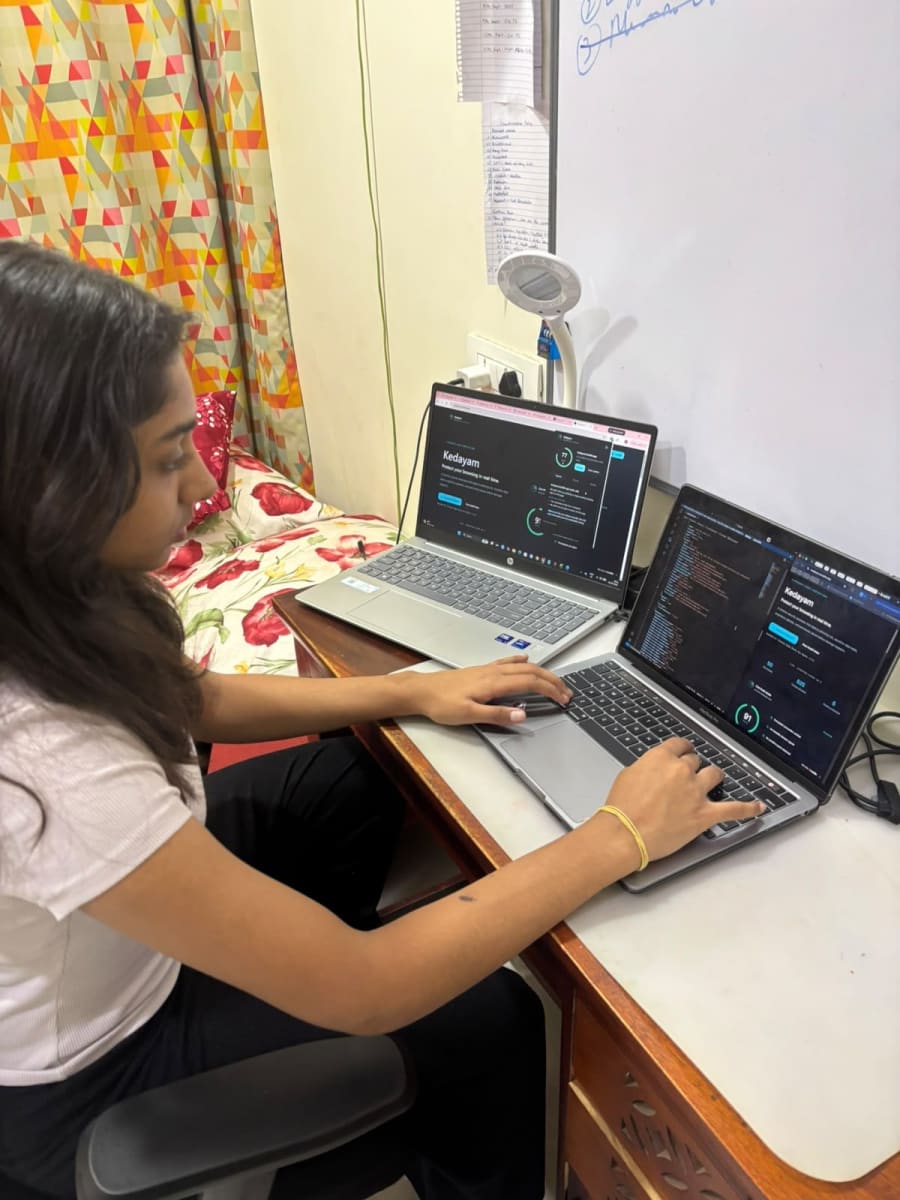
The attack pattern, she says, is consistent: "a message arrives via SMS or WhatsApp appearing to be from a bank, it links to a fake page that collects credentials or OTPs, and by the time the victim realises what happened, the money is gone." India, by her account, reported over 22 lakh cybercrime cases in 2024, and 51% of victims never report at all. Most tools that could intercept this, she says, are paywalled, built for enterprise environments, or not designed with India's threat landscape in mind.
Kedayam is her answer. It is a browser extension that detects phishing attacks, ClickFix malware, sensitive data leaks and tech-support scams in real time, entirely on the user's device, with no cloud processing, no API keys and no telemetry. It analyses the URL before the page loads, scans the page after load for phishing and brand impersonation patterns, then tracks behavioural signals, like whether a login form is secretly posting credentials to a different website. The extension is free and, she says, will stay free.
“The internet is becoming increasingly difficult to navigate safely, and I wanted to build a tool that could make that problem a little easier for everyone.”
Deeksha Karthik
She is a student at Oberoi International School - JVLR. Kedayam is not her first attempt. She started with MoneySatark, a financial literacy platform she built to help people in India recognise and avoid online financial scams, which won the Global Youth Action Fund award. "I realised awareness has limits when the scam page is convincing enough and the user is distracted," she says. She then wrote a research paper on using machine learning to detect cyber threats, which was published, but it was, she says, "still theoretical". "Kedayam is the step where I'm actually intercepting the threat."
The technical side, she says, is largely done: fourteen rounds of adversarial security auditing, with 703 tests passing across 240 test files. What she thinks about most is calibration, whether the extension will flag legitimate pages and become "more of an annoyance than a safeguard." "A tool that cries wolf stops being trusted very quickly," she says. Kedayam is live on the Chrome Web Store now, and structured feedback from users is what is informing that calibration work.
It is on the Chrome Web Store as Kedayam Browser Shield. "The gap right now is between existing and being used," she says.