
Art & Creative Expression
A drawing canvas that talks back in sound
Aditi Ranjan's Perceive is a web studio where blind and low-vision users create visual art through sound, and 10,000+ drawings have been made on its website since launch.
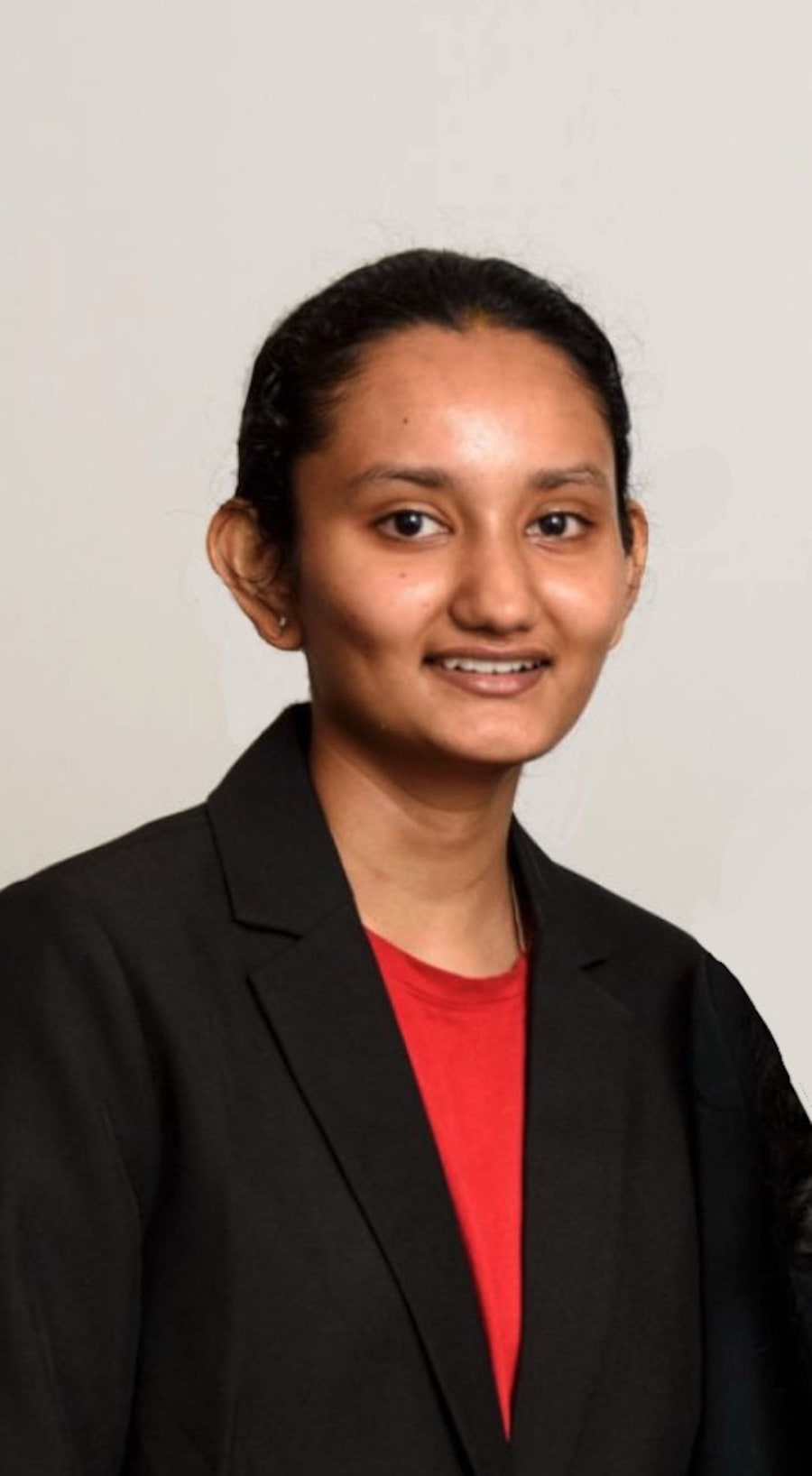
Move a cursor up or down the page and the pitch changes. Move it left or right and the stereo panning changes. "Instead of relying on a screen, the canvas talks back," says Aditi Ranjan, so that "the sound itself becomes a map of where they are on the canvas."
The canvas belongs to Perceive. Aditi is its founder and executive director, and a student at Dougherty Valley High School. She describes it as a web studio that lets blind and low-vision users create visual art through sound, and then turn those creations into physical tactile prints. She puts that group at more than 7 million people in the US.
“Then a question arose: what about those whose access is limited by sight? That question became Perceive, where we’re writing our own definition of what a canvas can be in the first place.”
Aditi Ranjan
It began as a question.
"Growing up around art and technology, I kept thinking about how much of the art world is built around seeing," she says.
The same gap shows up online. Aditi says that "almost all creative tools on the web assume you can see the screen", and that accessibility usually means navigating menus, not actually making art. The opportunity was to build "a concrete creative tool that could live in a browser and be used in classrooms, maker spaces, or at home." There was a personal pull too: "it allows me to design with audio first".
The work started in a design and prototyping phase. Aditi sketched the core interaction model: keyboard-driven drawing, audio feedback on position and borders, and export to SVG/3D formats. Small Web Audio and canvas experiments tested whether real-time pitch and panning based on cursor coordinates felt responsive enough in the browser. Perceive is now forming partnerships with accessibility centres for the blind and with art organisations to widen its reach. The next step is rigorous testing with visually impaired users, and releasing version 3 of the app.
Perceive has launched publicly, with version 2 released recently. The initiative has reached 1,000+ followers, 50,000+ views and 10,000+ drawings made on Perceive's website so far. The international team has grown to 18 members across 9 countries and US states.