
A wearable that lets you feel a conversation
Mrityunjay Gupta built AERIS, a wearable that turns speech into text in real time and turns the emotion behind speech into vibration patterns you can feel on your skin. It costs about $30 to make.
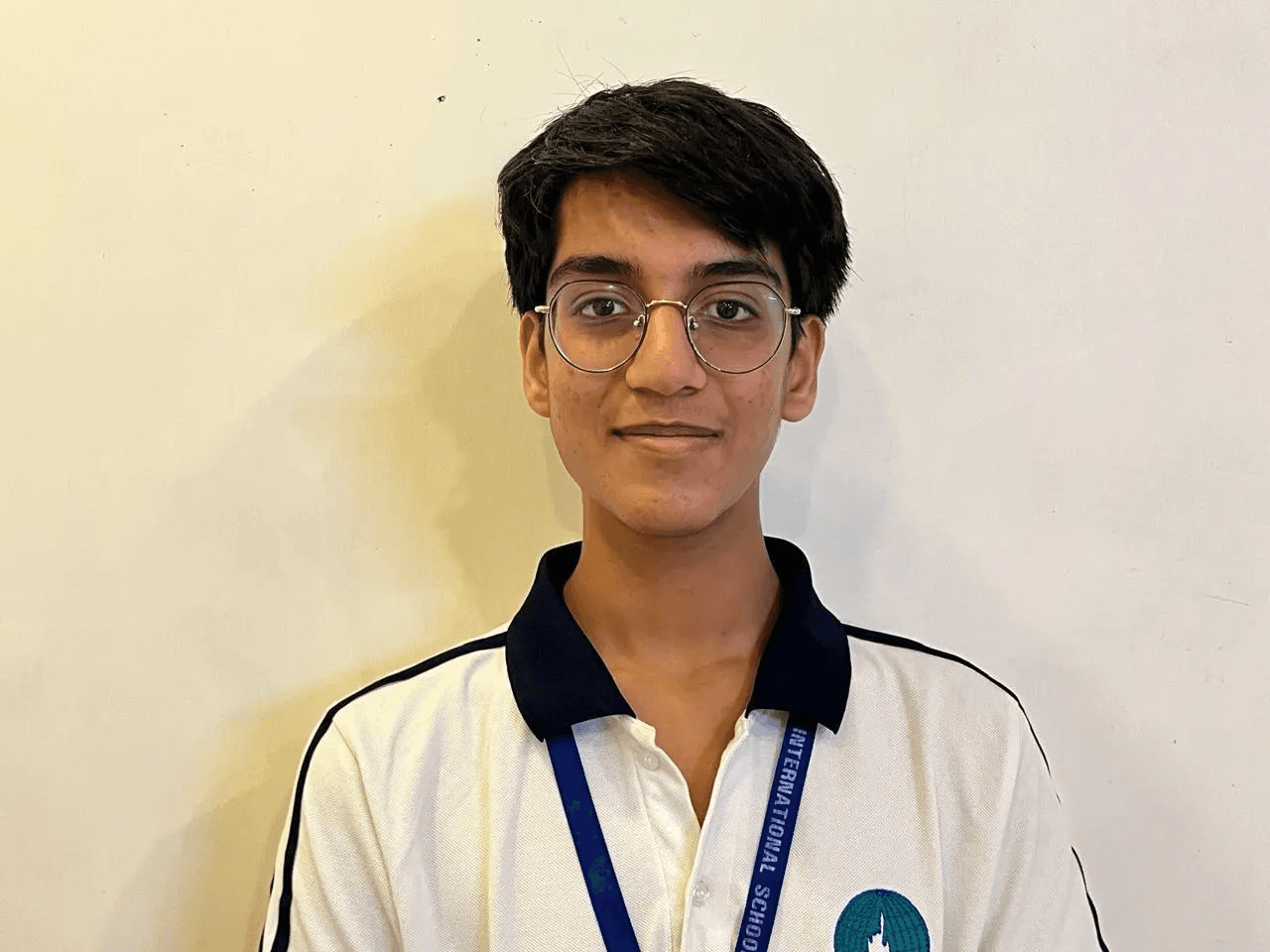
In a fifteen-person household in Bhilwara, Mrityunjay Gupta watched his grandfather grow quiet at his own table. For about ten years the family bought hearing aids, the expensive ones and the cheaper ones, and one after another they failed or stopped fitting his life. "The money hurt," Mrityunjay says, "but the thing that stayed with me was watching him go quiet."
AERIS is what he built as an answer, and it does two things. It turns speech into text in real time, running at about 99.3 percent accuracy in his own testing. And it reads the feeling underneath the speech and converts it into vibration patterns on the skin. Five feelings, five patterns. "Joy does not buzz like urgency," he says. The method is not held privately: Mrityunjay is first author, with an industry co-author, on a paper presented at the IEEE ICESC 2025 conference, DOI 10.1109/ICESC65114.2025.11212452. He says the publication mattered to him less as a credential than as a way of putting the method in the open for anyone to build on. By his count, about 135 people now use the device, saving families roughly $63,000 they did not have to spend on conventional aids.
I stopped trying to give him sound and gave him a way to feel a conversation instead.
Mrityunjay Gupta
The other half of the project is the price. A standard hearing aid costs about $500, which he says is why roughly one in five of the people who need one can afford one. AERIS costs about $30 to make, and a manufacturer has quoted $15 per unit at volume. For a family living on about $20 a day, he says, that is "the line between yes and no."
He is from Bhilwara and studies at Jayshree Periwal International School in Jaipur, so the device was built in the gaps around school. His next move is 60 more devices into his community, and awareness, so that the people who need one can find out it exists. Reaching those people, he says, is the part he has not solved yet.