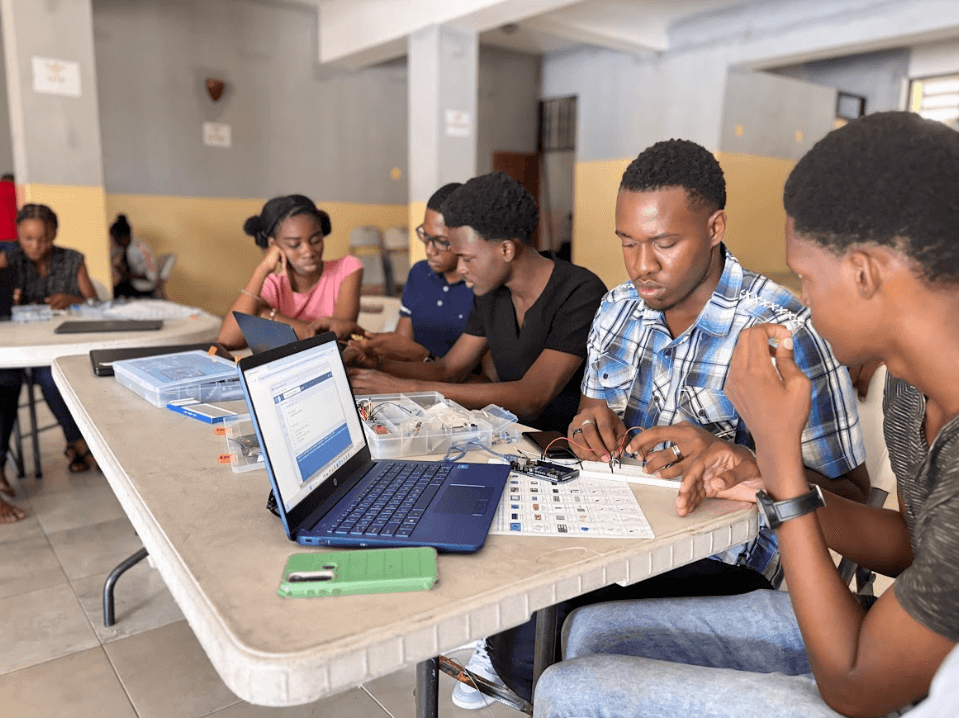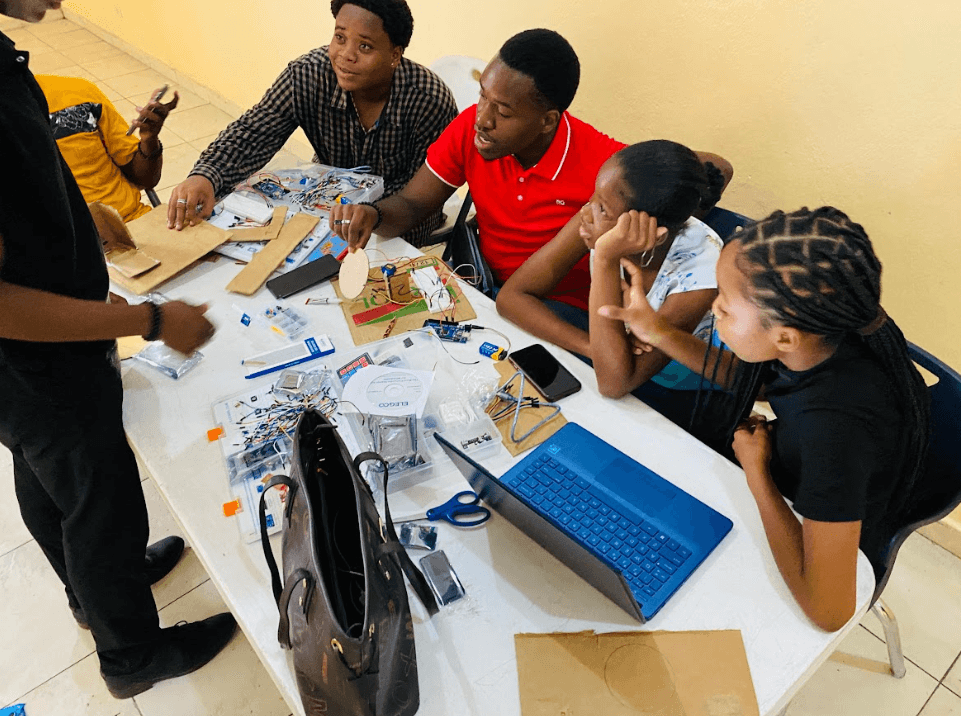
A kid debugging code no one asked him to fix
Josias P. runs a four-week hands-on STEM program in Petion-Ville, Haiti, where former participants come back as coaches, and he runs it from a scholarship place in Germany.
A kid who had been, in Josias's phrasing, "actually sure" he could not understand code ended up debugging someone else's program for them without being asked. The program that put both boys in that room is called Join Our Path, JOP for short. It is a four-week hands-on STEM camp Josias runs in Petion-Ville, Haiti, while he studies at UWC Robert Bosch College in Freiburg.
He points to the gap it exists inside. By his figures, fewer than 25 percent of Haiti's secondary schools offer real STEM education, and about 19 percent of households have a computer. Insecurity and the closing off of university access have left a lot of young people unsure what to work toward, and with fewer places to gather at all, a teenager who cares about technology often has nobody nearby who shares the interest.
Understanding something on your own has always felt a little incomplete to me.
Josias P.
He reports 24 participants last summer, 17 boys and 7 girls, drawn from seven schools across six cities, and five working projects at the end of it, all built with Arduino-compatible kits and a lot of shared attempts. Former participants come back as coaches, which he says is how the community keeps growing year over year.
"It only really becomes real once you've had to explain it to someone, slow down for them, watch them get stuck and then get it," he says. This is why he says the coaching setup "matters as much as it does": the kids doing the teaching the second time understand what they learned "far better than they did the first time around."
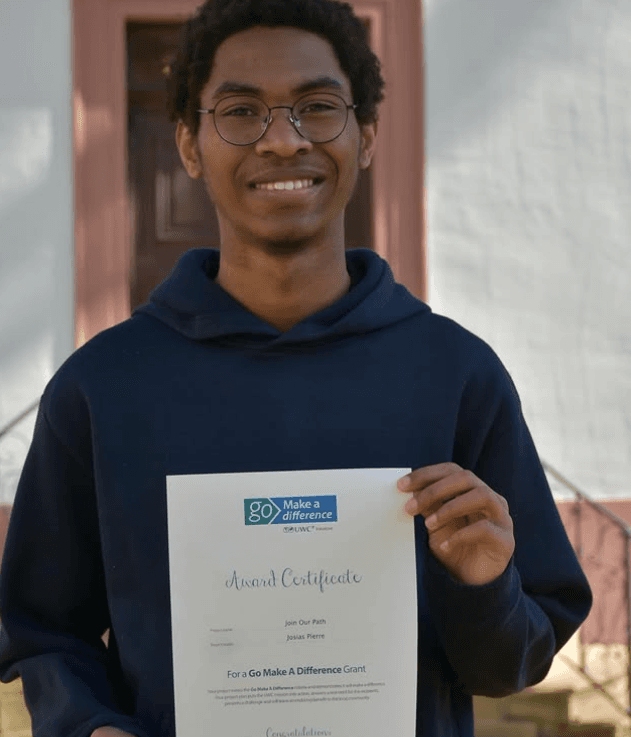
The bottleneck he names is equipment. Enrolment is capped by how many kits, breadboards and motors he can put on a table, so more equipment is directly more teenagers in the room. The next planned stage, coding and AI, needs laptops most participants do not have. He is also, in his own words, "still figuring out how to hold onto that as the program gets bigger." He holds a GoMakeADifference micro-grant, awarded through the United World Colleges network, for the same program.