
The lopsidedness measure a fifteen-year-old developed at 1am
Jared Qin taught himself to build AI that catches galaxy collisions the big sky surveys have been filing as ordinary. He wants his model pointed at the Rubin Observatory's first flood of data.
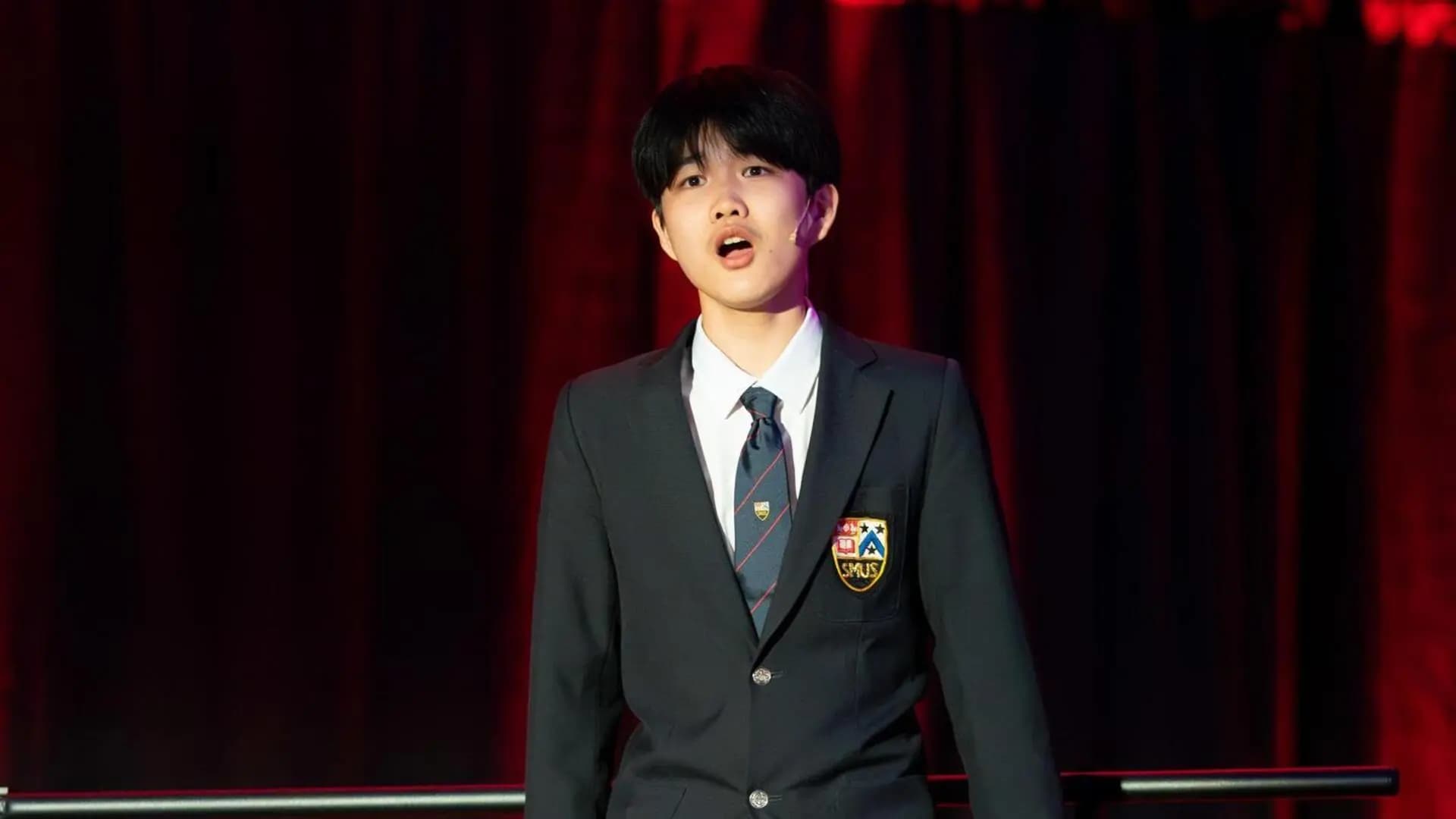
Around 1am, in his bedroom on Vancouver Island, Jared Qin developed a way to measure how lopsided a galaxy stays even after it has settled from a collision. He says he was fifteen. "When it worked," he says, "that feeling is most of why I keep going."
The problem he chose is one professional astronomy has known about for years. When two galaxies collide they do not stay obvious. "After a while," Jared says, "they settle into something that looks normal, so the crash gets buried and they're counted as ordinary. That's a real problem, because mergers are one of the main engines that grow galaxies and feed their black holes." Miss the calmed-down ones, he argues, and the whole picture of how galaxies evolve rests on an undercount.
A kid with no lab and no money can still find something real the big surveys walked right past.
Jared Qin
He attends school in Victoria, at St. Michaels University School, and works mostly at night. His model learns inside simulated universes where the wrecks are already labelled, then runs on real telescope photos and pulls out, by his account, collisions everyone had filed as normal. The part he calls his own contribution is the lopsidedness measure he developed, the reading that a galaxy carries the shape of a crash long after it has calmed. He documents the method on an open-source project board.
The Rubin Observatory in Chile has just switched on. "It's already firing hundreds of thousands of detections a night," Jared says, "more sky than every survey before it combined, and almost none of it will be seen by a human. The discoveries will come from models that can sift that flood for things we haven't named yet, and I want mine to be one of them." His own model has not been run against Rubin data yet.
The bottleneck is what it was at the start. The simulations and the telescope data are free, the compute is not. Every model he has trained so far is, in his phrasing, a shrunk-down version of the one he actually wanted. What he wants next is "GPU time, the gap between the toy version and the real one."
Outside the astrophysics he produces hyperpop and drum-and-bass in Ableton, and has lately been turning real space sounds into music.