
Youth Leadership
The teenager who built young writers somewhere to go
Vartika Chaudhari started Voices for Change with five unfunded workshops in rural Uttar Pradesh, and it is now a youth-led publishing platform with 120 active volunteers across chapters in 23 countries.
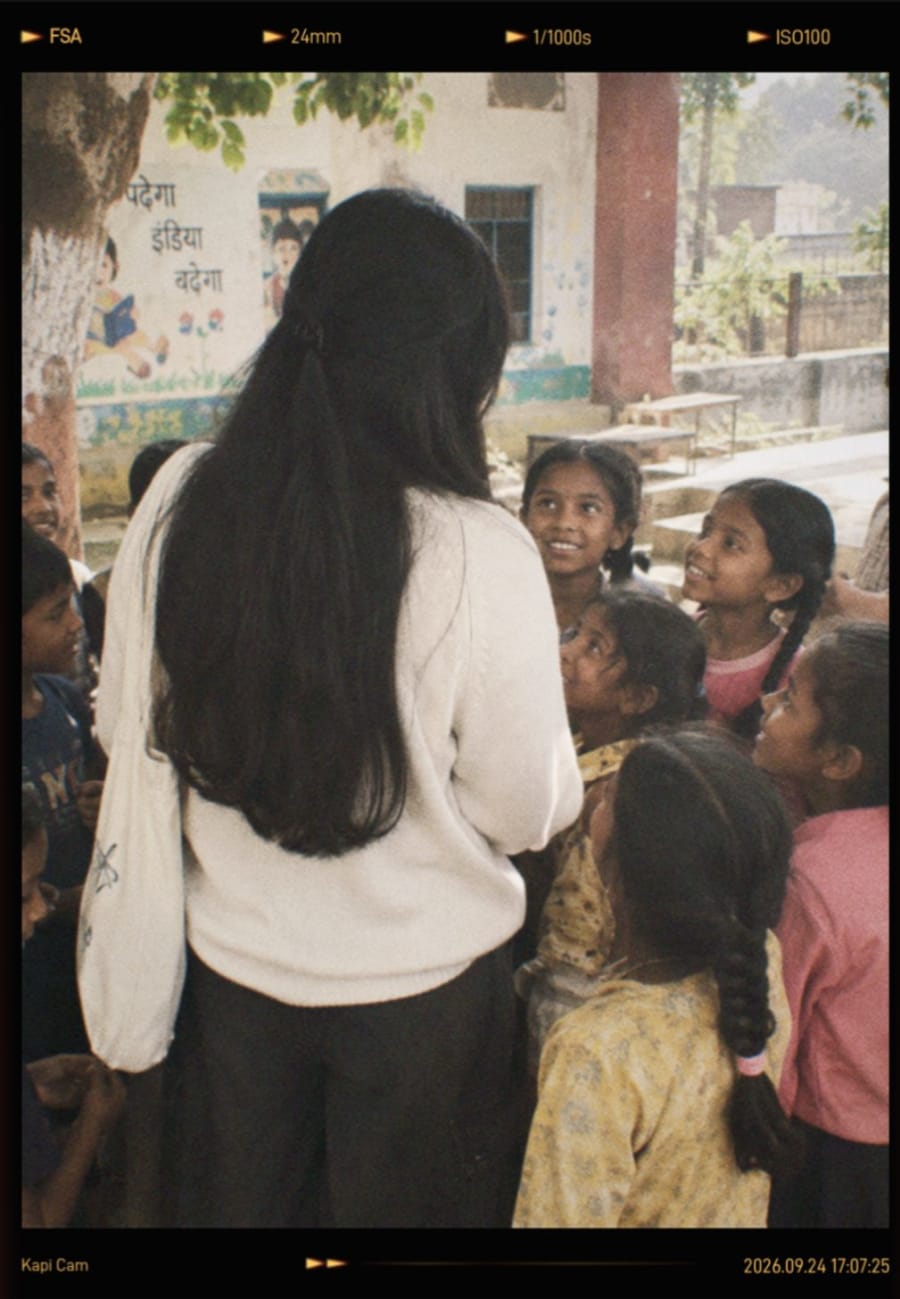
"Five workshops, rural Uttar Pradesh area, no funding, no team." That is how Vartika Chaudhari describes the start of Voices for Change. She taught students how to speak, how to argue, how to hold a room. "So I just started showing up," she says.
Something bothered her every time she left. "I was handing them a skill and then taking away the only space they had to practice it," she says. "Nobody built them anywhere to keep going."
“Stars don't rise without surviving the fire.”
Vartika Chaudhari
She was tired, she says, "of being in rooms where adults talked about young people without talking to them". She has sat in rooms where she was the only person under 30.
Today Voices for Change is a youth-led platform and non-profit, "a movement built from scratch by a teenager in India," she says. It has 120 active volunteers contributing through chapters in 23 countries, reaches 28,000 people through its online blog, and has distributed 10,000 advocacy toolkits in the past year. It publishes essays, opinion pieces, personal narratives and features written entirely by young people, on topics from climate justice and mental health to gender equity and education policy. On editorial calls, she says, teenage writers are treated "the way professional journalists are treated".
She writes too. She has been published in the World Anthology and in a government-run magazine, and she is a student at Lucknow Public School.
Voices for Change has never had a single rupee of funding. "Everything so far has been me figuring it out," she says. She has made mistakes and published things she later reconsidered. What keeps her going, she says, is a message from a first-time writer "saying that seeing their words published made them feel, for the first time, that their perspective mattered."
She wants to build an AI coach the workshop students can use between sessions, to "practice a debate, get feedback, try again at midnight if they want to". The next phase of VFC, she says, involves mentorship pairings between young writers and professionals, and regional language coverage so that young people writing in Hindi, Tamil, Bengali and other Indian languages have the same platform as those writing in English. A website is being built.
"We are still growing," she says.