
Peace & Justice
The history the camp's children are forgetting
Mohammed Asem founded Arakani Youth Innovation, a refugee-led organisation in Cox's Bazar, and wants to preserve his people's history and take peace-building work into the refugee camps.
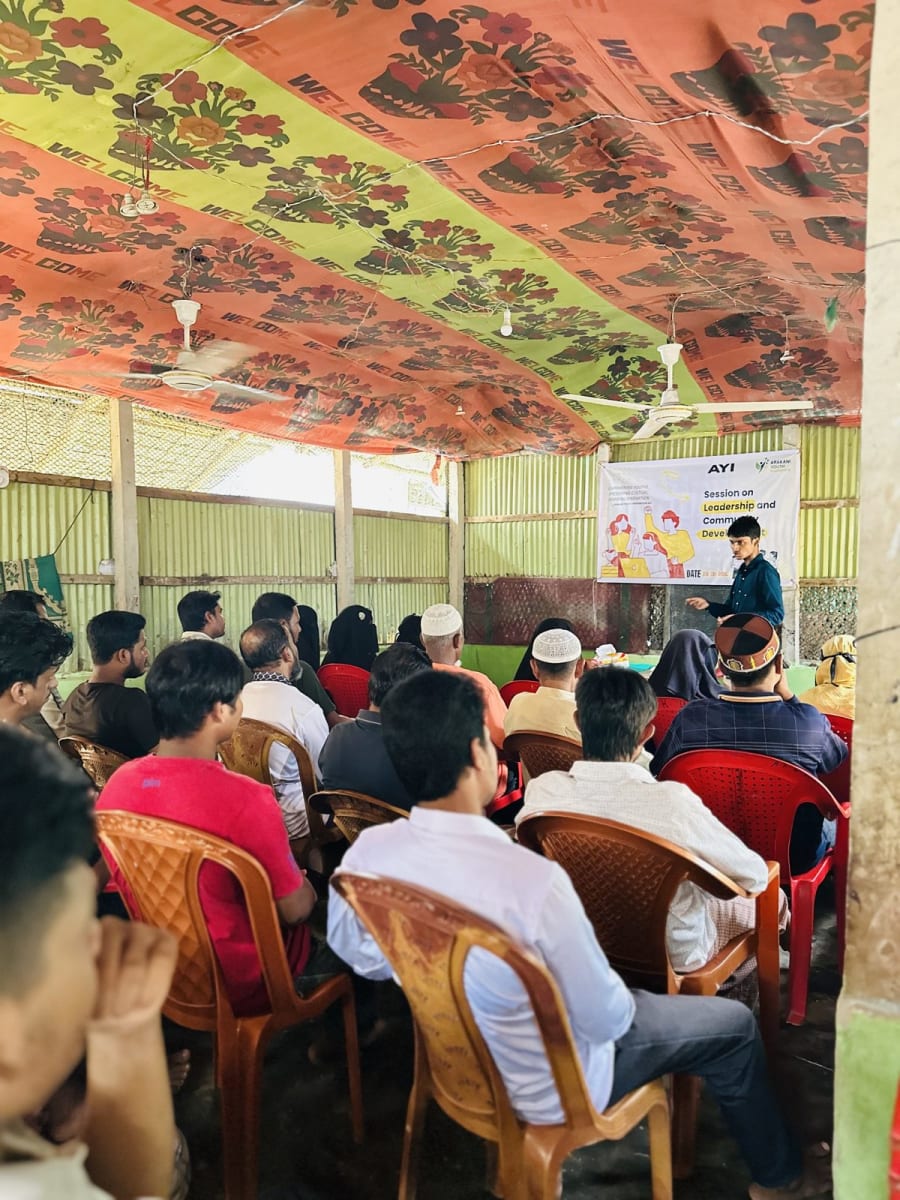
Children who were born in the camps at Cox's Bazar, or arrived very young, are "gradually forgetting their rich history, cultural heritage, their belonging, and identity," Mohammed Asem says. He puts that down to how little of the Rohingya past reaches them where they are.
He describes a community enduring "hardships, poverty, lack of opportunities, access to livelihoods, statelessness, and forced displacement," in what he calls "the world's largest refugee camps of Cox's Bazar, Bangladesh." Young people, he says, "cannot see a better future."
“As a Youth Activist, I am not fighting for myself; I am fighting for the people who are fighting for their survival.”
Mohammed Asem
What he says would help is unglamorous and specific. He argues the camp needs "peace-building sessions, workshops, and programs," with skills training in "communication skills, leadership, advocacy, participation in youth engagement, and preparing women as driving forces within the community." He says the camp has got worse year on year, and he names weak leadership and thin training as part of why.
He is direct about that. "The young Rohingya women and disabled people are always denied and ignored in decision-making and leadership within the community," he says.
He wants to take on three projects. Preserving Rohingya history "from being lost." Keeping "the camp safe through awareness sessions and workshops on Peace-Building." And "Reinforcing the systematic and proper leadership by following gender inclusion and participation." Those three, he says, "are the most important pillars that can help rebuild the Rohingya refugees from division."
The vehicle for it is Arakani Youth Innovation, AYI, a refugee-led organisation he founded in Cox’s Bazar. He built it to empower Rohingya young men and women: strengthening their capacity in leadership, building advocacy skills, reducing gender inequality and injustice, and finding innovative ways to preserve Rohingya culture, history and identity. What he says he wants at the end of it is a Rohingya community "that inspires not only their community but also the world."