
Entrepreneurship & Innovation
The hair mask that started as a science fair project
David Karara and his groupmates at Green Hills Academy are developing a hair recovery formulation for Type 3A to 4C textured hair, now being tested on hair fibres and braids with advice from salons.
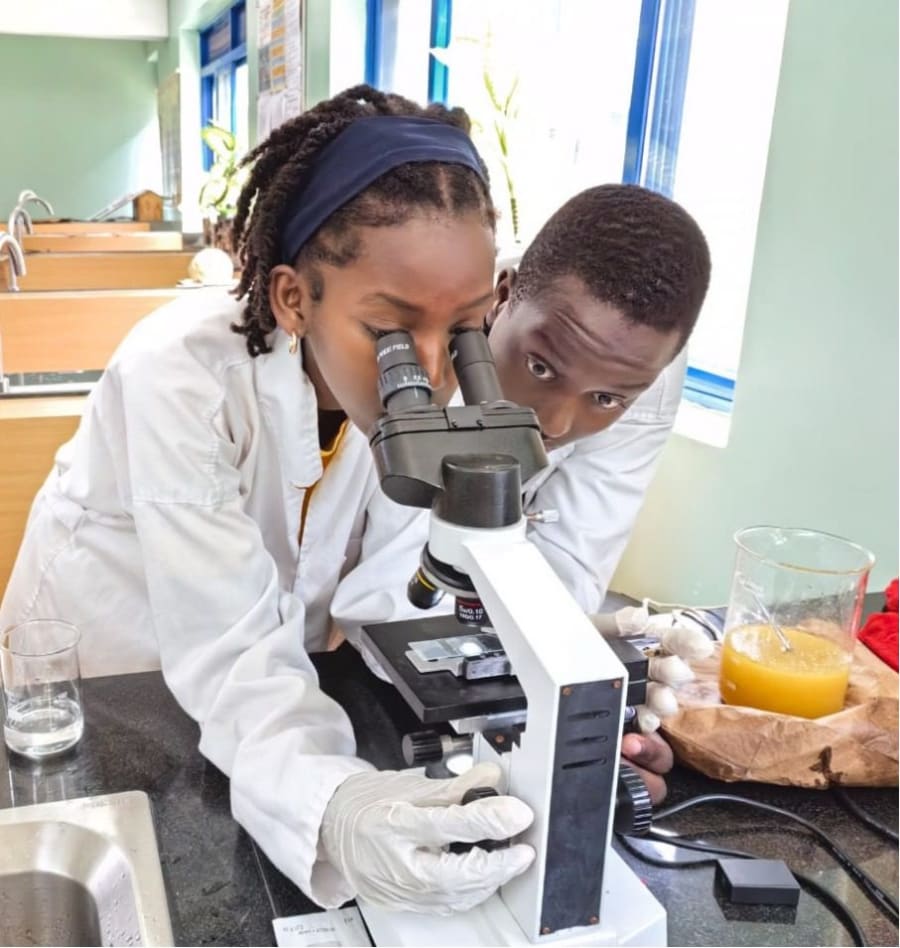
The hair mask started as a science fair project at Green Hills Academy. "It was not fully recognized, and it could have easily ended there," David Karara says. Instead, they pushed it further.
What he and his groupmates Maeva Ishimwe, Isabella Claes and Serena Kylie Ikuzwe are building is a hair recovery formulation for Type 3A to 4C textured hair, focused on moisture retention, reducing dryness and helping prevent breakage. The idea came, he says, from noticing "how often textured hair is treated like an afterthought" in science, in beauty and in product development, even though it has very specific needs.
“Growing up surrounded by women and girls, we asked a simple question: what do we need that shouldn’t be this expensive? For us, the answer was hair care. That question became a project and taught me something I still carry with me: you don’t have to wait until you’re older to start solving the problems you see.”
David Karara
The project became personal for him because he comes from a family of mostly girls, and hair care has always been important around him. He has seen how much time and money, and how much emotion, can go into keeping textured hair healthy. He has also noticed that many people with Afro-textured hair are pressured to make their hair look closer to straight hair. "There is nothing wrong with straight hair, but when textured hair is constantly treated like something that needs to be fixed or changed, it can slowly erase culture, identity, and confidence," he says.
"We did not want to make a product that changes textured hair into something else," he says. "We wanted to create something that supports natural curls, coils, and crowns as they are."
If the product grows, he says, it could support local ingredient suppliers and salons, small producers and women-led businesses in hair care and beauty.
The group is still testing. They are trying the formulation on hair fibres and braids to see whether it improves moisture retention, and they are speaking with salons for advice, for hair cuttings to test on, and to understand the challenges people with textured hair face. "We want it to respond to real people’s needs," he says.
"Our hair is already beautiful, but we still need products that help us take care of it properly," he says. Eventually, they want to turn the formulation into "an affordable, trusted product for people with textured hair, while celebrating our natural hair instead of trying to erase it."