
Environment and Climate
Turning Almaty's air quality numbers into daily decisions
Assiya Marat is building AirGuard, an early-stage prototype that turns air quality data into answers about whether to run, open a window or let children play outside.
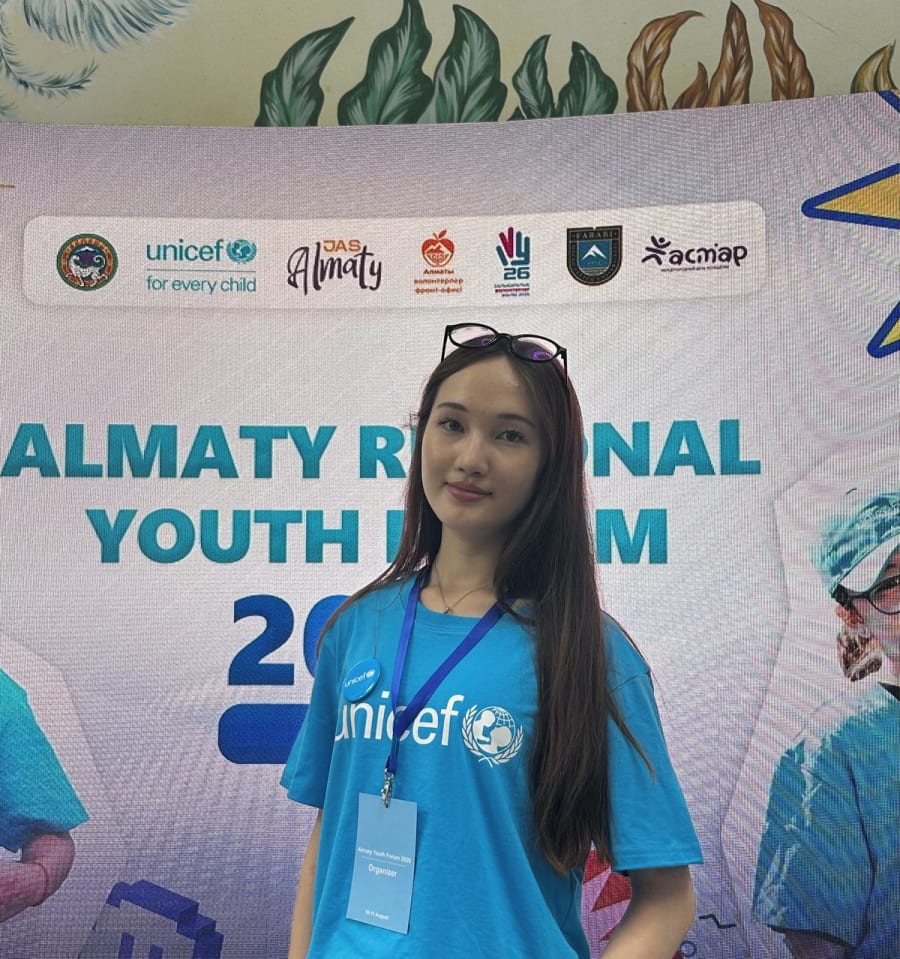
"Should I go for a run today? Is it safe for children to spend time outside? Should I keep my windows open?"
Those are the questions Assiya Marat wants AirGuard to answer.
“Your individual efforts matter, regardless of how small or big they are. The fact that you decide to step in and take action when the world experiences the most devastating challenges already shows that the future belongs to those who choose to care.”
Assiya Marat
Assiya lives in Almaty, "a city where air pollution is something people experience almost every day." Growing up there, she says, severe smog was something normal. "People joked about it. Complained about it. Took photos of the mountains when they were visible and moved on."
Originally from Almaty, Assiya is now a junior at Episcopal High School in Virginia, in the United States, where she studies Advanced Environmental Science and serves as Sustainability Coordinator. She approached the problem for years through research projects, science competitions, STEM programs and academic papers. "The more I learned, the more frustrated I became," she says.
The data already existed. "My city alone has hundreds of thousands of air quality measurements generated every day," she says. "Yet most people still don't know how to use that information when making decisions."
One moment changed how Assiya thought about this. "My mother has allergies. During periods of poor air quality, I've watched her struggle to breathe comfortably," she says. A question kept coming back: "If all this complex data exists, why does it still feel useless to the people who need it most?"
"A parent doesn't wake up wondering what the PM2.5 concentration is. They want to know whether their child should play outside."
That, she says, is where the idea for AirGuard came from.
Right now it is "an early-stage prototype that focuses on turning air quality information into practical, personalized guidance." Assiya has built prototypes, tested ideas, and spoken with environmental science researchers and organizations working on air quality. "Some assumptions survived those conversations, but others didn't."
The ultimate goal she describes is to build something that helps transform complex information into environmental action.
"And look, maybe I won't solve an entire air pollution issue," she says. "But if I can help even a small number of people make better decisions, understand their environment more clearly, and feel less powerless in the face of a problem that affects millions, that's already a promising start."