
How to get press for your work as a student
Ziyaan Virji · July 23, 2025
I'm Ziyaan Virji. I started an organisation called For The Menstruator as a school project in Mombasa, Kenya, making reusable sanitary pads and working on menstrual health. It has since been covered by the BBC, DW, Yahoo News, and more than 35 other outlets.
The most common question I get asked about that is how to get press for your own work.
So here is the full breakdown of how it happened, the press release template I used, and a cheatsheet you can keep.
How I got featured on BBC
Picture this. It's June 2019, I'm in grade 11 at the Aga Khan Academy in Mombasa, and it has been just over a year since I launched the organisation.
We have around 10 volunteers, we've reached around 350 people, and we've worked in around 5 countries. The organisation has since grown to more than 150 volunteers and 25,000 people reached across 10 countries.
I've just found out that I won The Diana Award, a prize set up in memory of Princess Diana and one of the most significant honours a young person can receive for social impact.
But what do I do next?
Step 1: Work out what "the story" is
Before doing anything, figure out the story you're actually pitching.
Based on what worked for me, I built the MINT framework for a compelling media story.

M is for Match. How does your story align with the interests of the outlet you're pitching? BBC ran a series called "What's New?" highlighting stories of young Africans across the continent.
I is for Important. Why does your story matter to their audience? Period poverty was a stigmatised issue in Kenya and across Africa.
N is for New. What's unusual about your story, and why would it get attention? It was unexpected for people to see a 17-year-old boy in Africa working on menstrual health.
T is for Timely. How does your story connect to something happening right now? People around the world were about to mark Princess Diana's birthday and legacy in July.
Your story sits where all four overlap.
Step 2: Write a press release
This is the most important step.
A press release is a one to two page document with everything a journalist needs to run the story. Here is the template I used, free to copy.
Six things to always include:
- Headline. Think of it as the breaking news line on the front page. Clear and attention grabbing.
- Introduction. Your first paragraph should cover the five Ws: who, what, where, when, and why.
- Body. Add context here. Use numbers, research, and statistics, and write in inverted pyramid style, most important to least important.
- Quotes. Include one or two, from yourself or from a relevant stakeholder, to give the story a human voice.
- Media collateral. Create a folder of photos, logos, and video of your work and link to it. They will ask for this eventually, so have it ready.
- Contact info. Press releases get circulated between people and platforms. Most people forget this. Put your details, or your team's, at the start or end of the document.
Step 3: Start at home
At the time, like most people reading this, I had no connections in media.
I didn't let that stop me. I reached out to the communications team at my school.
In the early days, go to the marketing or communications department at your school, university, or workplace. It's also worth reaching out to people you know who have had media coverage before.
My school's comms team posted the press release on the school website and sent it to some of their local media contacts.
So how did the BBC find out about it?
Step 4: Build momentum
A couple of local outlets covered the story. That led to national outlets writing pieces. Then outlets in Europe, Asia, and North America picked it up too.
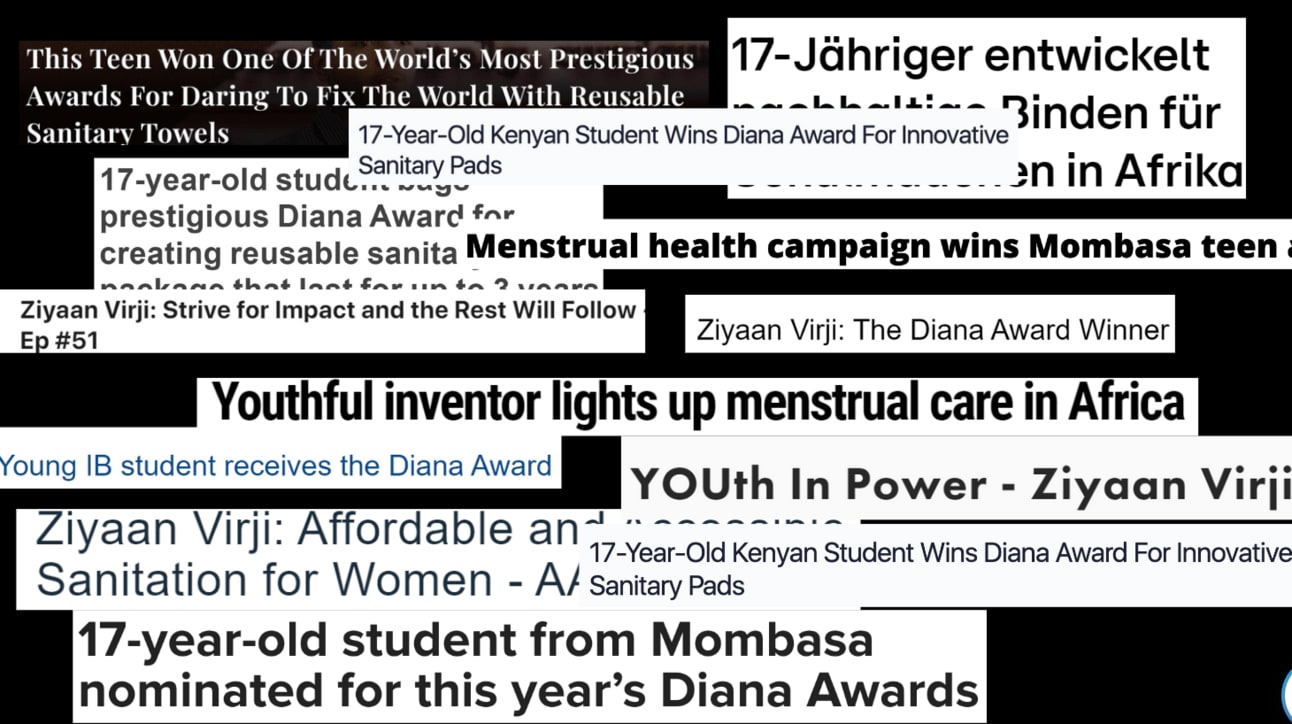
The story had caught fire. I was having my fifteen seconds of fame. That's when it landed on BBC's desk.
It was a random Tuesday evening when I got a call from the comms team. "Ziyaan, BBC just called. They are flying in tomorrow from Nairobi, prepare your team and we will inform your teachers, you will be missing class."
And the rest is history. You can watch the BBC Africa interview here.
The lesson: media works fast. You'll have no traction for a long time, and then someone picks the story up and it moves. When you hit that stage, build on it. Post the features on social, use them when you reach out to new contacts, keep the momentum going while it exists.
Step 5: Maintain the relationships
This is something I wish I'd known earlier.
People in media are hard to reach, and they're being pitched constantly. So when you do get to work with one, treat it as the start of a long-term relationship rather than a one-off.
Some ways to follow up:
- Thank them. After the story runs, send a personal note. Tell them specifically what you appreciated about working with them.
- Engage. Follow them, and engage properly with their work.
- Leads. If they liked your story, they'll probably like similar ones. Send them along, without being spammy.
- Update. Keep them posted roughly once a month on your progress since the story. They like seeing the impact of their own work.
- Meet. Try to see them in person about once a quarter. Use it to understand what they're actually looking for.
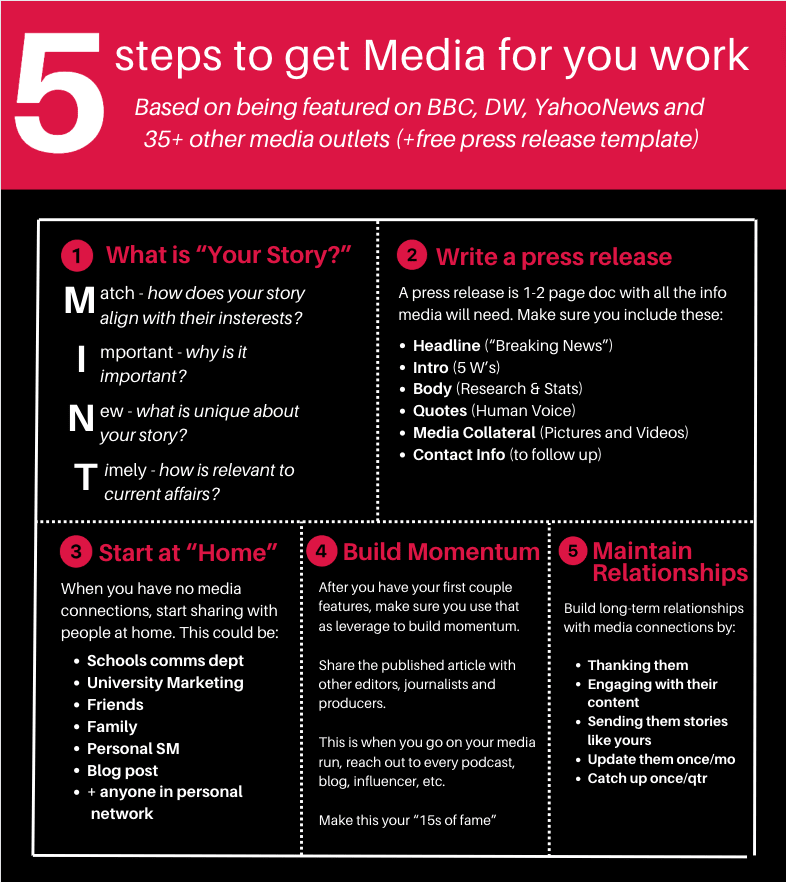
The cheatsheet
Here is the whole thing on one page.
Why this matters
This is the guide I wish 15-year-old Ziyaan had when he was starting out. There were so many gatekeepers, and figuring any of this out from the outside was close to impossible.
None of the steps above require a contact, a budget, or permission. They require a story worth telling and the willingness to send the first message.
Frequently asked questions
- How do you get media coverage with no press contacts?
- Start at home. Reach out to the communications or marketing team at your school, university, or workplace. They already have local media relationships and are usually glad to have a student story to place.
- What is the MINT framework for a media story?
- MINT stands for Match, Important, New, and Timely. Your story should match what the outlet already covers, matter to their audience, be genuinely unusual, and connect to something happening right now.
- What goes in a press release?
- Six things: an attention-grabbing headline, an introduction covering the five Ws, a body written in inverted pyramid style with numbers and research, one or two quotes, a link to a folder of photos and logos, and contact information.
- How long does it take to get press?
- There is usually no traction for a long time, then it moves very fast. Once one outlet picks up a story, local coverage can turn into national and then global coverage within days, so be ready to build on the first feature.
- How do you keep a relationship with a journalist after a story runs?
- Thank them personally, engage with their work, send them leads for similar stories without spamming, update them monthly on progress, and try to meet them in person roughly once a quarter.